Minorities in Media
Saturday, October 8, 2011
Stories featuring minorities in print and broadcast media have always been limited, causing some minorities groups to discontinue their consumption of news that they cannot relate to.
The Internet was suppose to fix this problem because it is has unlimited space and publishers.
Online culture is not held back by the institutionalized habits of legacy newsrooms, and this is a post-racial society.
Coverage is expected to cover all different lifestyles, including class, race, geography, generation, and gender.
A yearlong study by the Robert C. Maynard Institute for Journalism Education examined mainstream online media and identified the coverage of different minority groups.
The conclusion was that online media still has the same problems as traditional media when it comes to covering minorities.
The Huffington Post featured the greatest diversity of stories. Salon and Slate came in last with the fewest stories covering diversity.
African Americans are the minority most covered, although many of these stories are about celebrities and athletes. Stories about Hispanics tend to focus on the issue of immigration.
According to the 2010 U.S. Census, minorities are 36 percent of our population, but this statistics doesn't correlate with the amount of coverage minorities receive.
Photo Credit: Joseph Girmay
Putting it all Together

Journalism students do vast amounts of writing throughout their college years. They dabble in a variety of formats and topics in order to gain exposure to as much as possible. Before receiving that diploma and bringing their college days to a close, they should begin to think about job hunting.
Even if you don't plan on actively searching for an employer, there is one tool that is essential for every journalist. This tool will be your best form of marketing and could even land you an interview that you don't ask for. The creation of an online portfolio is essential for any professional journalist, and perhaps even more essential for the graduating student.
This is the place where casual readers and potential employers will come across samples of your finest work. This is the place where your name can be linked to other work you have done, and where people can learn more about you. But what exactly should be in this online portfolio?
The CUNY Graduate School of Journalism gives some great advice on how to create a top-notch journalism portfolio. It mentions to only display the work you want to show off, which is great advice. If you think the article isn't great, it is likely that others interested in you will think the same thing and come to the wrong conclusions about your work. That article also advises to make the design of your portfolio your own and to set-up all your social media pages in a similar style.
An article on Poynter adds some more advise for designing your portfolio. Apart from linking to your best work, you should also link to news on the web about you. The more things you link to, the higher your portfolio will rank on search engines. Just be certain that the links are good and relevant.
Also include links to your various social media accounts, and a good sample of photos and video to add variety to the blocks of text. In today's world it is important to showcase the ability to write good stories and create multimedia that supports it.
If this course had been longer, it would have been beneficial for us to take a few weeks and develop our own online portfolios. I have heard only benefits when it comes to journalists and online portfolios. And if it helps you land your first major job, wouldn't it be worth a few hours of effort now?
Photo courtesy of creative commons.
IPhone For Journalists
Wednesday, October 5, 2011
Protecting Sources
As budding journalist we are just begining to figure out ways to find sources. We talk to our friends and prowl the internet looking for reliable information.
The question is whether we think about their protection. This is in reference to those sources that find you, namely those looking to expose the corrupt.
In a recent article with the Society of Professional Journalists, Lucy Dalglish revealed a few of her tips for protecting whistleblowing sources. The folowing are a few that really stuck with me.
1. Be Clear- Your source need to be aware of what your willing to do to protect them.
2.Don't keep reports on file after your article is published.
3.Consider publishing everything- In doing so a subpoena may not be issued requiring you to give up any information you have left.
Protecting your sources is of the utmost inportance, especially when it comes to sensitive subject matter. People don't take to well to having their secrets exposed and will look for someone to blame.
While they may pursue you their is usually nothing they can do and their next target may be your sources. Know that if a source is revealled they will most likely never provide information again.
While not the most important reason to protect your sources, this is deffinately of high priority. Without our sources journalists really have nothing.
Introducing the iPhone...4S.
After weeks of speculation and hope of Apple debuting the highly-anticipated iPhone 5...they didn't.
Apple, instead, unveiled an upgraded iPhone 4 called the iPhone 4S, which includes an 8 mega pixel camera, a more powerful processor, and a new voice activated personal assistant called Siri. But, it's not the iPhone 5.
Nevertheless, the new upgrades can have a big effect on reporting and journalism, according to Jeff Sonderman at Poynter.
He notes the 5 things that journalists can benefit from most with the iPhone 4S and the iOS 5 operating system.
1. Price drop for older models: The new phone is leading to the older versions' price dropping. It's now easier and cheaper to join the iPhone revolution.
2. The 8 mega pixel camera: Pictures and video can be taken faster and with better quality than ever before. Come across a news story on the go? This camera makes capturing multimedia even stronger.
3. Safari reading mode: The Safari Web browser now comes equipped with a tool to make articles easier to read by stripping away ads and promotional materials, although many publishers are likely to not be fans.
4. Newsstand: There is now a separate store for buying and reading magazines and newspapers, making it even easier to get news on the go.
5. Twitter Integration: With Twitter becoming a huge piece of reporting, journalists will likely enjoy the new closer integration with Twitter that allows users to tweet directly.
While the iPhone 4S may not exactly be the iPhone 5, journalists should still take a look into it and see the benefits it offers.
It is a Digital Era, There is Always Coverage
I have grown immensely frustrated with the Occupy Wall Street protest, but not in the way that would be the obvious assumption.
When browsing several news blogs I happened across another article talking about the Occupy Wall Street campaign in New York. The article was informative in my opinion; however, one line from the article sparked frustration. The section of the story was talking about Occupy Wall Street claiming to not have been getting enough media coverage. And, while this complaint was specifically geared toward the fact that mainstream media has provided this movement very little coverage, 2011 is a digital age and everything--no matter how big or small--is always covered somewhere in the media.
While this movement has yet to receive major attention in the national news, the age of "citizen journalism," as stated by editorsweblog.org, is at hand. With the number of tweets, blogs, video footage, and photographs available to inform the nation and the world of this cause, the voices of those oppressed are being heard.
If those of the movement would simply stop complaining about the lack of main-stream media coverage and take advantage of the digital advances of our time who truly knows what will result. Look at Barack Obama's campaign--it was on facebook.
Analyze This

'Analyst', 'specialist', and 'expert' sound like credible titles. However, their credibility needs to be matched up against their credentials.
Freedom to photograph
Tuesday, October 4, 2011
Picture: CreativeCommons.org
No one denies that it is important to discuss whether or not a college degree is worth all the money thrown in to it. In today's economy, times are hard, and people appreciate seeing some serious coverage over the issue to help them decide.
People don't seem to enjoy it when college students dress like, well, college students. The Kalamazoo Gazette learned this the hard way after running a front page photo of a woman speaking with a college employee. She was dressed normally, in a t-shirt and jeans, and the shoulder bag crossing her body partially covered up the words 'Kiss My Ass' on the front of her shirt. Partially, but people still noticed.
One reader wrote in to say that the photo "distracts from the integrity of the article". Joyce Pines, Kalamazoo Gazette public editor, noted to Jim Romenesko at Poynter.org that "this vulgarity is so commonly used in speech, online and in print nowadays that it pales in comparison to some of the more notable swear words....Perhaps the best that can be said for the whole situation is that all of us should stop and think about the images we’re projecting".
Are the readers right to be protesting? After all, it is the public newspaper. The phrase is not the most professional thing that should be said to consumers, and after it came out, it was made abundantly clear that readers did not appreciate this kind of language. However, what about the young woman? Doesn't she have the right to wear what she wants in public?
When protesters gather to demand change of the status quo, the majority of Americans will say that they have the right to their free speech, whether or not it is cluttered up with unseemly vocabulary. The Kalamazoo Gazette printed that photograph not because of what the shirt said, but because of what the photo contributed to their news story. It is unfortunate that the shirt slogan took away attention from the real issue at hand.
Google's Job in Improving Media
The journalism industry is shifting from old media to digital, which has been influenced by real-time social media tools like blogs and Twitter.
Coffee Cafe...and a Newsroom?
False News on the Internet
There is an example of this in an American Journalism Review article (AJR) in which it discusses the Piers Morgan rumor that was started by a false tweet.
That tweet follows, "Exclusive: @PiersMorgan suspended from his CNN show while investigations continue following new revelations on alleged phone hacking claims".
The rumor spread from there and it is just one example of how journalists can easily be led astray from the truth.
According to the AJR article titled, "Steering Clear of Misinformation" it says, "Dan Silverman, author of "Regret the Error" and founder of the website RegretTheError.com and Mandy Jenkins, social news editor for The Huffington Post, taught several ways to help journalists avoid the pitfalls of online falsity."
The two gave a presentation titled "B.S. Detection for Journalists" during the Online News Association Convention in Boston on Sept. 3rd. This presentation went over ways that journalists can figure out if a story is true or if it is B.S.
With the ease of rumor spreading via internet today, journalists need to be on top of their game when it comes to spotting or researching a fake story.
Photo from Creative Commons Read more...
Apple's iPhone 4S Offers Great Features
Technology is changing our world faster and faster everyday. People and companies have a hard time keeping up with it. However, buying the iPhone 4S will only help you increase your updated society information and the latest news.
Read more...
What the F**k!
This summary is not available. Please click here to view the post.
Read more...Joining Forces: The Four Need to Knows.
Even with new technology, the world demands its news. And with the Internet population shifting their focus onto blog sights such as: blogger, tumblr, etc. News sites are finding themselves going towards that direction.
Before News sites do make this change, there are four key elements they should take into consideration before pursuing it's Local blog.
The first element the News site should ask is: What does their Local Blog need?
Like any good relationship, whether it be personal or business, it is important for both sides to portray what they need from each other, as well as short term and long term goals. The site should ask directly, and this would be a good way to find out if you can supply the needs before committing into the blog.
The second element is be prepared. Whether it is to form a rough draft with what you plan on writing in the blog or just a future plan, always be ready for questions that may form. Another good thing is to invite your partner blog into conversation. Team work will make this run more smooth.
The third element is to understand how the Web operates. Not only just how to function on search engines, but how the blog operates as a whole. You need to take in account how many views are on a page or what drives attention to the blog site. To sum it up, know everything about your site/blog.
The final element is to get your advertising and marketing departments to support you. This is where the entrepreneur comes into the whole aspect of this business. Always ask for team work and support. It is very essential to have everybody feel the same excitement you do about this particular project. If you get them to support the effort, it will run smoothly and quickly into something fabulous.
I believe these four elements are very interesting, since I too blog on my own personal site.( I'll put it down on the bottom if anybody cares to look at it on their free time.--I have to warn you though, its kinda messy right now because I haven't had time to really work on it lately) I never knew that News sites actually did join up with their local blogs, and it makes me kind of want to sleuth around and see if KCCI joins up with a local Des Moines blog.
Works Cited: www.poynter.org
Picture Cited: www.creativecommons.org
Cait's blog:http://thelifeofcait.tumblr.com/
Media Affect in Knox Case

Yesterday, Oct. 3, Amanda Knox was cleared for the murder of her roommate in Italy. The Knox case has had a lot of presence in the media the past few years. Has the way the media covered this trial had any impact?
News for All...or not?
Journalism Students Take Part in Widely Published Investigation
"News21 proves that top journalism schools and top teachers can produce journalism as good as any in America today," said Newton. "News leaders and major news organizations agree — because they use News21's journalism."
Tackable...The New Frontier
Monday, October 3, 2011
Tackable may first appear to be yet another app in the sea of thousands available on the smart phone market. With closer examination, however, it could become the most widely consumed information source we have ever seen.
Social Medipedia
Saturday, October 1, 2011

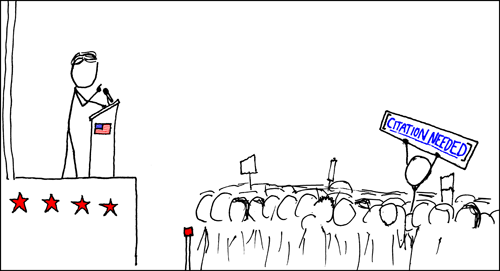
Remember the days when Wikipedia was about as valid of a source as the story told from the guy who knows a guy who knows a guy who has some drug dealer cousin that heard the story from some girl? Even though Wikipedia has become a bit more valid of a source for information, people still have a negative connotation toward citing it as a source for papers.
Social media is now threatening to become the new Wikipedia.
Much like the collective collaboration concept of Wikipedia was great, the immediacy of news on social media is a great concept. It is how we, as a whole, choose to use this tool that will determine how it will be perceived in the future. Posting breaking news on hearsay and questionable information will be the downfall of the reputation for social media as a news outlet.
An article on editorsweblog.org brings up a great question: is tweet first, ask questions later the best policy? Is it so important for people to know right away? When there is the risk of your tweet being incorrect, there is a chance that you will lose credibility. Have enough incorrect tweets, you will not be a valid information source to a large population of the online news readers.
A different article on editorsweblog.org discusses how several different news companies handle the balance between immediacy versus accuracy. There are ways for these two important news elements to live in harmony, and it would bode well for journalists everywhere is the world would ensure accuracy in their reports. Even something as small as a tweet can cause a massive reaction, and misinformation can end up doing more harm than help.
Do you have any ideas on how to ensure accuracy? How do you make sure your tweets aren't full of false information?
Photo courtesy of creative commons.