Dissatisfaction with News Media

Sunday, September 25, 2011


The American public is not happy with journalists or the news that they cover, according to a recent survey conducted by Pew Research Center.

Only 25 percent of people say that news organizations are factual within their stories, and 66 percent say that stories are "often inaccurate". This is quite the decline from 2007 when 39 percent said that news mostly got their facts straight, and 53 percent said that stories are inaccurate.

An overwhelming majority of the public also believe that the press is "often influenced by powerful people and organizations" and "tend to favor one side".

Of the 12 evaluation categories of news media, nine equal or surpass record highs in percent of displeased responders, indicating that the public is growing more and more dissatisfied with the media.

There is some good news, though. The public trusts news organizations (especially local news) more than state and federal government, business, and congress. (While I'm not sure that this is really GOOD news, it does make journalists feel a little better!)

Pew Research Center releases an annual report on the public views of the values of news media. They have been performing this survey since 1985.

With all of these negative views on news media, shouldn't we do something about it? One of the main goals of journalism is to provide factual information to the public, something that they are telling us we are not doing.

Joseph Pulitzer, establisher of the coveted Pulitzer Prize, warned of biased media in his journalistic credo:
Our Republic and its press will rise or fall together. An able, disinterested, public-spirited press, with trained intelligence to know the right and courage to do it, can preserve that public virtue without which popular government is a sham and a mockery. A cynical, mercenary, demagogic press will produce in time a people as base as itself. The power to mould the future of the Republic will be in the hands of the journalists of future generations.


Click here for a complete report of Pew Research Center's findings.


Read more...

Public Lacks Trust in the Press


Americans don't believe every thing they see, hear or read. According to a Pew Study, citizens have a hard time trusting the press.


The poll reported "66% say news stories often are inaccurate, 77% think that news organizations tend to favor one side, and 80% say news organizations are often influenced by powerful people and organizations."

Although these figures may seem abysmal, the public trusts the press more than government and business, and "62% say their main news sources get the facts straight."

Because the press is supposed to be the trusted source of information. It's watchdog reputation means that Americans should be able to rely on the news to tell the truth in regards to government, business, and any facet of life.

All journalists should take note of these statistics. Personally, this reinforces my belief in double- and triple-checking facts and interviews because our readers and viewers shouldn't have to question our credibility or motivations.

Our job is to report.

It should be that simple. Ask questions. Write down the answers. Report the facts.

http://www.youtube.com/watch?v=Xzf7fT8-g-s

Read more...

Social Media Background Checks


Social media is a powerful tool. It can be used to define and brand yourself – for some, this can be either good or bad. Social media background checks are not a novel idea as employers have been using social media go research potential candidates for years.

Vanessa Junkin of the Carroll County Times reports on how social media affects today’s modern hiring process. Employers need be wary and potential employees be aware, there are rules in place for such a process.

Social media screenings for positions may only screen for certain types of information. As Junkin points out, these screenings may look for excessive use of vulgar language, racial remarks, inappropriate photos, and references to violent tendencies.

Vivian Luckiewicz of Law.com reports on some of the restrictions of such screenings. While there is no law against social media background checks, employers must continue to abide by fair practice hiring laws already in place. While conducting social media background checks, as with other background checks, employers may not discriminate against race, religion, age, disability, or gender.

Junkin interviewed Don McCombie, president and virtual CEO of NoWorriesIT. Junkin asked McCombie about the influence social media has on the hiring process.

“A candidate doesn’t become disqualified for just a silly comment,” McCombie said. “The check [is] more to see what the person’s character is like.

It is important to keep in mind not only how you and your peers view your social media presence, but also how potential employers view it as well.

Read more...

Social Media Fills Gap Left by Press

In Mexico City, before police and reporters even arrived to the location of a violent crime twitter users were tweeting about the dangerous situations advising readers to avoid the area. Is social media saving lives in Mexico? Damien Cave reports on the importance of social media and the need it fills in the New York Times.

Recently, a law was passed by the Veracruz State Assembly made it illegal for social network users to use such outlets to undermine public order. This comes following charges last month when two individuals spread rumors via Twitter that local schools were under attack causing mass panic.

Cave interviewed Andres Monroy-Hernandez, a doctoral candidate from Mexico at the M.I.T. Media Lab.

“Social media is filling the gap left by the press,” Monroy-Hernandez said. “In different regions of Mexico, both the state and the press are weak, while organized crime is becoming stronger and, in some places, replacing the state.”

Social media is quickly becoming the largest, most trusted source of information in Mexico. In a country with weak press, Twitter is becoming a staple of not only information, but safety in some dangerous areas.

How much credit should the general public give to information passed along by social media? In some cases, information may divert individuals away from a crime scene. However, in some cases false information may cause mass panic. How can this be monitored?

Read more...

The Ecosystem of Journalism

We have discussed in many posts the future of journalism, and decline in traditional media. One group of graduate students has decided to quit discussing it and use scientific methods and studies to help save the industry. The City University of New York School of Journalism has a program of dedicated students in its graduate journalism program that have begun the attempt to take on this rising challenge.


The project, being funded by the Knight and McCormick Foundations, is taking a new approach to build revenues and lasting companies in this unstable market. Two conferences sponsored by the MacArthur Foundation is where it all began as well as the idea to look at journalism as an ecosystem to better understand where strides can be made.

Viewing the industry as an ecosystem has allowed these students to identify who is reliant on each other and examine how all of the components in each niche work together. Advertising, local news and papers are some of the areas of greater focus. They believe by working in unison with all of the players, a more comprehensive approach to solving the problem of declining revenues is feasible.

Another major focus for the students is on-line news. They will be gathering new information and doing experiments to see how they can generate the most revenue.

"You may want to be small, but to succeed at being small, you probably have to be probably have to be part of something big."-Mark Potts.

Being part of something big is just what these students will be if they can solve all of the problems in journalism. They will be relying on each other, just as we all do in this ecosystem, for support and ideas as they try and save the future of the news.

Read more...

Facebook's New Layout Important to Newspapers

Thursday, September 22, 2011


A month ago I would have scoffed at the idea. There was no way that Facebook would have any importance to a newspaper, apart from their need to have a Facebook page for fans to follow. With the new changes to Facebook, newspapers should start paying attention.

Facebook has over 800 million users and has posted a day with over 500 million members logging in. It is safe to say that a lot of people's opinions are able to be expressed via Facebook. This is why the reaction to the new layout should be alarming to newspapers everywhere.

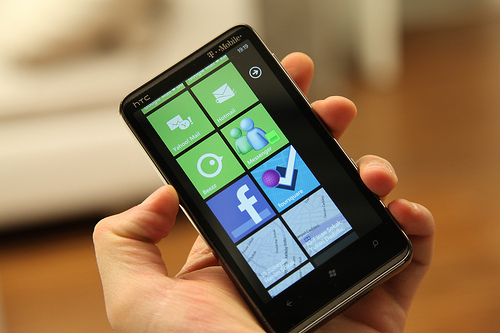
According to this article, Facebook claims it is trying to become "your own personal newspaper". Their news feed section is something taken directly from many newspaper websites. There is also a real-time ticker off to the side that keeps you up-to-date on who is doing what all the time.

And the overall consensus seems to be dislike.

If the Facebook members have such a strong reaction against the new format, what does that mean for the newspapers? It means that there is a possibility that a large number of potential readers would not like navigating their website. It means that they might be losing readers because of their layout.

Or maybe there is no correlation at all. What are your thoughts? Does the initial reaction over Facebook mean that newspapers should look into revamping their format? If so, how could they do it better?

Photo via Creative Commons.

Read more...

Government Over Taking the Media

Wednesday, September 21, 2011

Australian Press Council is butting heads with its government over print media. Before September 14 the press was funded independently. The government took action and stepped in to take over but not just because of the decrease of funding. They also want to regulate the media.


This action that the government is taking reminds one of the Egypt government back in January of 2011. Recalling the events they shut down the internet to block social media sites so that the people could not get together for more protesting.

Media should not be controlled by the government because like the Egyptian people, societies will get upset on what they are blocking and not showing what is in the news.

Rupert Murdoch is an important figure in Australia media because he owns 70 percent of there newspapers. The big scandal with him hacking phone lines is also causing government to step in and make sure that does not happen again.

Even though Murdoch was in the wrong he was just trying to get the news out faster to the people because they have the right to know.

The government is acting out of being scared. They are worried that something is going to go wrong and make them look bad.

The Australian Press Council has to accept the government regulating because that is where all the funding is coming from. Government controlling the media, is that bad? Or against our moral rights?

Read more...

How Twitter has Changed Campaign Coverage

More and more people are getting their news, including political news, from social media. This offers a quicker and more up to date way to see the latest news about political candidates. But does quicker mean better? Or are reporters these days just worried about the quantity and speed of their reports, and not the quality?


Jodi Edna said in his report, Campaign Coverage in the Time of Twitter, from the American Journalism Review."No longer do reporters slog elbow to elbow with presidential contenders vying for votes in Iowa and New Hampshire. No longer do they get to know the candidates in a way that voters do not – up close and personal, with their feet up, their guard down and, perhaps, a drink at the ready. No longer do they have the luxury of weeks or days or even hours to gather string and dig deep and analyze before they write a story."

Edna continues on say that many reporters today don't have enough time to write what reporters 10 years ago would consider a story since they are so busy with Twitter, blogging, or shooting a video clip.

Reporters these days are no longer following candidates around and getting to know them,"There are fewer people observing these candidates up close and more people writing about them from afar. There are a lot more people opining, blogging, tweeting, but not out there looking at candidates face to face," says Zeleny of the New York Times. Is this a good thing? Are we getting the best, most accurate stories from these reporters? Or is this just the fastest way to get out information?

The new way of reporting has both its positives and negatives. People are definitely getting their news faster and more often by using social media. Also they have the options of seeing pictures of the candidate, clicking on a link to view a video that the reporter shot with his/her phone, or hear an audio recording captured by the reporter. And nothing is better than hearing from the candidates themselves.

But the negatives are clear as well. Continuing in his report Edna says this referring to today's reporters, "Almost to a person, they bemoan the loss of time to engage in in-depth reporting, to go beyond the story of the day to unearth the insightful gems that really tell us something instructive, something fundamentally important, about the men and women who would be president." Reporters today are sacrificing their time to do deep research on candidates so that they can keep getting the latest, newer news.

Everyone is a potential journalist today. What is considered news today only remains news for a little while, until something new has to be blogged about. Is the new form of reporting on campaigns (little amounts of data but constantly updated) better for the voter than the old form of reporting, where we received in-depth stories about the candidate but not as often? Whatever way is better, campaigns are being covered more and more by people on sites like twitter, and less and less by reporters who do in-depth reporting.

Photo from creativecommons.org
http://youtu.be/PoScti4lii8


Read more...

Media Bias....Helpful?

Bias seems to be a term met with much negativity in the journalism world. As budding journalists we strive to keep our stories right in the middle of the political spectrum.


How boring is that though? This is the idea that Jack Shafer implanted in my head with his recent blog, Media Bias? Give me more Please!

Bias keeps us guessing and if you think about it it is one of the few things keeping the news honest. Without opposition in the journalistic world, people would never question anything.

It must be true if it's unbiased. Is that a positive mindset? No, I want to be told if I'm wrong or right just.

Why shouldn't we enjoy a little bias when it comes to our news? There are always two sides to every story and they most certainly will be told.

Blaming bad news on a biased opinion is lazy. If you hold strong opinions on a topic and upon investigation you find out you're wrong, well that would be the time to change your opinion.

As journalists we should be filters. We should be able to screen our news and be able to tell what is right and wrong. Simple reasoning should allow us to find the middle ground between two bias stories.

In the end journalism needs bias. It is the want to be right that is associated with bias that keeps people asking questions in the pursuit of the truth.


Read more...

Rage Against the Media

Tuesday, September 20, 2011

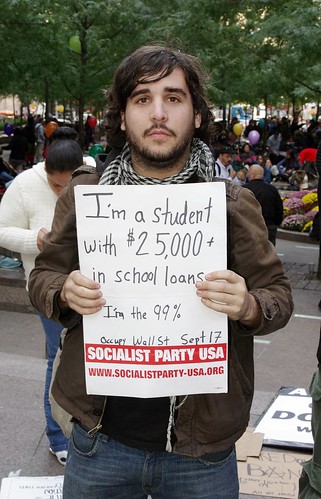
Day 3 Occupy Wall Street 2011 Shankbone 7
Photo courtesy of CreativeCommons.org

On September 17th, all was normal with Twitter. However, if you chose to glance down at trending topics, there were a couple of interesting choices:
#occupywallstreet
#sept17
#USdayofrage

If you were intrigued enough to click on one of these hashtags, the content might have surprised you. For it appeared our nation was in the middle of a giant, unexpected economic protest on Wall Street. The hacktivist group Anonymous used some of its many Twitter accounts to help organize the event, and stood among the crowd during peaceful demonstrations against 'coporate pigs' and the American government.

If you were watching the mainstream American news, you never would have heard any of it. As the day went on, Twitter users began complaining of a major media blackout against what they claimed civilians would deem to be news. And it seems to be true: the first major media company to release an article over the event was Al Jeezera English, a foreign media outlet (read the article here). In fact, while Al Jeezera released their article the same day as the popular revolution begun, it took American outlets at least a full day before they began to release any kind of coverage (see Business Week's coverage here). It was too long for the protesters, one of whom tweeted "This whole lack of news coverage thing for #occupywallstreet is kind of disturbing. Yet the asinine Glen Beck rally got all that press?"

Why did it take the American media so long to respond to a major protest on one of our country's most famous streets? For weeks, journalists have been covering foreign protests with a lot of effort and no small amount of dedication, yet the biggest news of Saturday was left to the foreign media and protesters to break themselves. There is speculation that major media corporations dragged their feet on purpose to cover it, because after all- the public was protesting specifically against corporations. Were the major news networks purposefully avoiding the subject to save their own dignity?

If journalists are going to continue referring to themselves as our nation's 'watchdog', then they need to be watching their own business moves. When you are a journalist, you don't do what's best for the corporation. You're doing what's best for your nation's civilians, and sometimes, you need to swallow your pride.

Read more...

Ten Years Later


Twitter exploded with hashtags of #neverforget and #GodblesstheUSA on the decade anniversary of 9/11, as over three million tweets acknowledged the occasion.

We shared where we were, who we were with, what we thought on that Tuesday morning ten years ago. Various news and social media websites encouraged us to express our memories and describe our experience since. The New York Times, among others, created an entire addition to their website covering every aspect of 9/11 from the events of the day itself to the impact on American Muslims since. Television documentaries and films consumed practically every station from CBS to OWN, Animal Planet to the History Channel. Newspapers took the opportunity to bring out the biggest and best in front page illustration.

We were bombarded with images and sounds. Videos of the attacks themselves and the minutes after. Recordings of panicked 911 calls and final goodbyes to loved ones.

Was it too much? Did the hundreds of hours of anniversary coverage trivialize the events? Or honor those affected most by the tragedy?

Nevertheless, whether there was too much exposure or not enough, the media succeeded in helping us remember that tragic day and the lives lost. A plummeting stock market, the Presidential election, and debt reduction plans were slightly further from our mind as we took the time to tune in to the coverage or glance through the commemorative magazine. Through television specials and newspaper articles, Americans came closer together as a nation in remembrance, just as we were a decade before.


photo courtesy of pingnews.com via www.creativecommons.com

Read more...

Twitter Changes the Game for Reporters


With the arrival of the 21st Century, journalism has had to evolve to keep up with reader's demands. In this new, technological age, social media websites have completely changes the journalistic world. Social media sites, especially Twitter, provide readers with constant, immediate news. This has created a more competitive working environment for reporters to break the stories first.

Additionally, journalists cannot simply be reporters in this changing business. They must also become editors, multi-media experts, and marketers to develop a brand for themselves in a way that makes them stand out from their competitors. They have to know how to do it all.

Twitter gives journalists tools they never dreamed would have been possible in the past millennium. This website allows journalists to watch for trends, establish sources, share and develop their stories, and brand themselves to millions of followers almost instantaneously. Plus they can do this all in the palm of their hand.

This one website has also changed the way readers get their news. The days of the newspaper are a thing of the past; replaced by LED screened cellphones and tablets. Readers want to know what is happening "now" not what happened yesterday, or even ten minutes ago. If journalists want to be successful in today's field, then it is essential they get with the times and use the resources in front of them wisely.


photo from www.creativecommons.org by okalkavan

Read more...

Hanging Out with Google


There's a new way for journalist to video chat these days, and its all thanks to Google+'s new features which were announced today. The new version named "Hang outs on Air" will allow journalist to record video and live stream their discussions to their colleagues.
Now with this built in feature, journalist can conduct their discussions publicly by:
  • Creating a virtual town hall where they can be outside and officials tell them the latest news.
  • Have a meeting with the editorial staff and then after everything is discussed and edited, they can post the video and the written editorial report.
  • They can even have a political debate at the Hangout!

If that wasn't the icing on the cake, Google made another announcement that they would be making a few more changes, including: support for Android phones that had front facing cameras, sharing streaming through their computer's screen, and sharing a GoogleDoc.

With all these new changes to the world of journalism, its making me very excited to hop right into the business and learn all these new ways to give me an edge of success.

Picture Credit: Creative Commons.

Accreditation: Jeff Sonderman at Poynter.org

Read more...

Reactions to Osama's Death

The night of May 2, 2011 is one that no American can forget. President Barack Obama declared, "Tonight, I can report to the American people and to the world that the United States has conducted an operation that killed Osama bin Laden." It was with these words that the entire country erupted in shock and celebration. The media also exploded with the news, and different themes were prominent in different mediums.


Citizens jumped onto Facebook and Twitter, many praising the military for the kill and using humor. @NZAfro tweeted, "R.I.P. Osama bin Laden- World Hide and Go Seek Champion. (2001-2011). Social media websites also hosted many discussions over if bin Laden was really dead or not.


Mainstream media focused on the details of the events leading up to and during the attack on bin Laden's compound. These outlets also spotlighted on the American and global reaction to the event.


As websites like Facebook and Twitter get even more popular, it allows the average citizen to have a say in the news and what themes get covered. Collecting information from many different mediums is vital to get the entire story because there is such a variety in the coverage. Events like this help support Marshall McLuhan's famous quote, "The medium is the message."


Photo credit: Sgt. Randall A Clinton

Read more...

Risky Responsibility

"I am hiding. Death has come."

These are the last words spoken by BBC journalist Ahmad Omed Khpulwak in a text message to his brother before he was killed by a United States' soldier in Afghanistan this past July. Khpulwak was one of 19 people to die in a fight that erupted between American forces and the Taliban after an attack on an Afghan television station.

Determined journalists travel abroad every year, risking their lives in countries plagued by war and destruction, but are getting these stories worth risking it all?

Khpulwak was only one tragic example, but journalists put themselves in the way of danger all the time. Seventy journalists were killed around the world in 2009, the highest death toll recorded in the last 30 years. War, hurricanes, gang violence, prisons, and drugs are just some of the frequent risks journalists take.

Many may doubt the sanity of journalists willing to cover dangerous situations, but these reporters simply believe that getting the story is worth it. A story means gaining a new knowledge that can be shared with the world that without the dedication of journalists would remain unknown. This knowledge gives journalists the power to influence decisions made around the world and provides a strong check on government. Journalists with the passion for truth and the longing to teach others are willing to undergo danger to share their story, their knowledge, and their influence. To all journalists who have died in pursuit of truth, may they be honored with our full respect and gratitude.

Photo Credit: Senior Airman Steve Czyz

Read more...

A Conflict of Interest


Don't bring your work home. Don't mix business with pleasure. Don't poop where you eat. Personal life and professional life should be separate.


The concept is simple enough. In order to be objective at work, we need to remain unbiased. For example, a doctor can't treat his/her spouse because of conflict of interest.

According to Thomas Sheeran on Huffington Post, Pulitzer Prize-winning columnist Connie Schultz resigned from her position at The Plain Dealer due to her husband's senatorial race. She explained that her decision resulted from the fact that her newspaper regularly reports on her husband's election.

Journalists and politicians are like macaroni and cheese; one without the other is devastating. The idea that either one would have to choose between a spouse and a career is equally devastating.

Schultz worked for The Plain Dealer for 18 years. Although she will no longer work for that newspaper, she will continue to writing for magazines and her book. I don't know how she chose one love over another, but it was her decision to make.

As a political science and multi-media journalism major, I often wonder whether I want to make headlines or write them. In high school I had the best of both worlds; I was president of student council and editor of the newspaper. I have avoided conflict between my two interests so far, but in the real world, I know I will have to decide.

Read more...

Twitter's Place in Publications


"Off the record," journalists have heard this over and over again, and it is a bit of a disappointment every time. Clearly journalists want the entirety of an interview to be "on the record"; we are not nearly as interested if it can't be published. With this in mind, what is the right way to use tweets?


As of late, members of the senate have been claiming that their public tweets are to be considered off the record. The fact that these tweets are public, for everyone to see, should point out how outlandish of a suggestion this is.


According to Jeff Sonderman on Poynter, several prominent bloggers and writers noticed this disclaimer and were then forced to remove several tweet quotes from their blog, noting the absurdity of the situation.


If prominent members of the senate are willing to tweet their thoughts for the entire Twitter community to see, then they should be equally willing to have these tweets quoted in text. It is no different then journalists using a quote from a previous speech. Senate members should back off, and keep their tweets "on record

Read more...

Emotion - To include it, or leave it out?

Monday, September 19, 2011

Emotion in a story works to create not only a mood, but also a setting that can help to grasp many readers attention. It gives insight into a background and can go so far as to convey the emotions of an entire crowd.

But where is the line between emotion and editorializing? Often times, writers will work to write emotion into a story, but will fail when they forget the thoughts of their subject and include their own opinions into a subject.

Emotions in Journalism by Ruhi Khan gives in-depth insight into the subject that many have had struggles with (including myself) of writing with emotion but avoiding that fine line. One quote that really caught my attention helped to bring into perspective my ill-thought belief on journalism and reporting on only the facts.

"The tremendous use of emotional play in news reporting makes one wonder whether it is reporting, or is it crossing over into something else and whether the media are increasingly getting involved in a moral crusade?"

A moral crusade perfectly describes what I have been dealing with, but in a different light. I have been trying to fight my emotions and what I was taught when it came to writing. I was keeping my own opinion in that all readers were like myself, and wanted something that could draw them in through imagination.

But the more I research, and the more I learn, the more I realize that I am not like everyone else, and news is catered to a market that has been around for centuries, so why try to fight my own battle? Is it really right to include emotion in a story, and if so, where does that line end where it turns into nothing more then a personal moral crusade?

Read more...

Could editorialization be the future?

As a writer who is used to giving in depth description and honing a skill of showing emotion through words, editorializing has been my biggest downfall. Journalism trains writers to give facts, and only facts; writing without bias and taking all emotion out of most stories.

Maybe this could be the underlying reason I tend to avoid news articles, as they leave nothing to the imagination and lay out all of the facts that help build a "good" story. Maybe this is also the reason that blogging has been able to thrive where newsprint has begun to dwindle.

In searching for pertinent information regarding editorialization in blogging, I was shocked to see the results of a Google search that contained many articles that pointed out editorializing in news articles. I began to understand why this is such a taboo point in news as many readers crave the facts and are looking for a quick read, and not another persons opinion, but when it comes to blogging, the conflict is welcomed.

The additive of consumer interaction has helped to boost the blogging lime-light as it adds an all important aspect of conflict into the story. The ability for a reader to voice their opinion on a writers views or facts adds involvement that helps the reader feel as if they are a part of the story and may also shed light on additional aspects of a topic for those who are un-informed.

Could this be a welcome aspect for news print that may help to once again promote their margins and give them a leg up on instant media access?

Read more...

"Released With A Hashtag"

Imagine living in a society where your voice was silenced, your rights were minimal, your safety was not guaranteed and the information you received about the world around you came with the caution that it may or may not be the truth. This unfortunately was not just the imaginary life for millions of people, it was the reality for those calling Egypt home.


In the midst of their recent revolution, however, there has been a great shift. This shift was outlined by Hanna Sistek in a post she recently co-authored with Tanja Aitamurto.

Prior to the revolution, Freedom of the press was not a feasible ideal. Nor was the idea of citizen bloggers, tweeters or facebookers. In fact, the media was so highly regulated by the government that a top newspaper, Al-Ahram, printed an apology for "inaccurate reporting" after President Mubarak stepped down.

With Mubarak no longer in control, the country's consumption and production of media has changed dramatically. The article states that new channels are being created, media agencies are forming and citizen journalist are becoming high profile "celebrities" in the region. This all began with something so simple, something most of us do everyday in America and something that is taken for granted-sharing.

This new environment is happening via the Internet in Egypt, and has begun to transform their culture and allow them to partake in the global exchange of ideas. It has also given way to a stronger sense of unity and ownership because they are now able to more freely communicate with one another and have open and progressive discussions on where they see themselves as members of this new Egyptian climate.

Although tremendous strides have been made in the short time since Mubarak's exit, there are still barriers to break down in the country. Freedoms of speech and press have increased significantly, but people are still being prosecuted, convicted and jailed for their words. The good news-the people in Egypt will not allow this to go on quietly. Thanks to their new tools (facebook, twitter, ect.) they are able to quickly spread the message and mobilize support when these instances occur. In fact, one blogger was recently freed from jail after an enormous outcry from the country. She was not only released but also saved with a hashtag.

Read more...

  © Blogger template On The Road by Ourblogtemplates.com 2009

Back to TOP