Twitter Engagement
Monday, November 14, 2011

Ninety-three percent of tweets by news organizations link to their own articles while just two percent asked for audience input, and just one percent where retweets.
The latest in news-industry issues, as written by multimedia journalism and integrated marketing communication students at Simpson College.


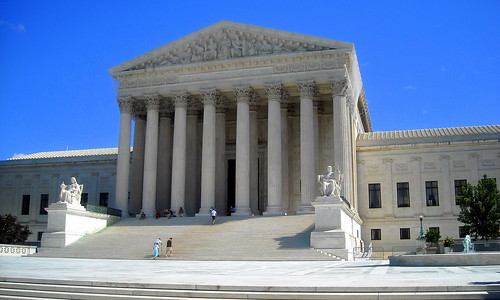
Last Wednesday the Iowa Court of Appeals ruled that school districts can not discipline newspaper advisers for allowing students to run material in student publications that the administration does not approve of. According to the First Amendment Center, the Allamakee School District reprimanded adviser Ben Lange after students at Waukon High School published material in the school paper's April Fool's Day edition that the principal found offensive. Find the case, Lange vs. Diercks and Allamakee School District, here.
The case is being hailed among students and journalism instructors as an acknowledgement of student rights, feared by some to have been taken away in 1988 after the Supreme Court ruled in Hazelwood School District vs. Kulhmeier that administrations had the right to censor student publications.
What does this case really grant students? Admittedly, some of the content that Waukon High School's newspaper the Tribe-une can be considered in poor taste- for instance, the students included a derogatory name for a rival high school and a parody cartoon of a biology teacher caught running a meth lab. But the students involved in the scandal are going to learn a lot about the journalism world.
First, edit your content- just because you have the right to say it, doesn't mean you always should. Making sure you can stand by what you write without holding regrets is a valuable skill in journalism. Basically, if you're going to get in trouble for it, make sure it's good. But also, students do have rights. Critically assessing every situation, both in the classroom and out, is a good way to monitor when your rights are being violated. Students should want to know when boundaries are stepped on and how they can fight back.
Students, stand by your words. And if someone is getting punished for that, then there's a problem.
Photo credit/NCinDC,creativecommons.org
The Monitor of McAllen, Texas, is now printing the Twitter usernames of its reporters by their articles so that readers can follow them on Twitter.
After the allegations of Herman Cain's sexual harassment, people started to view Cain in a new light.
Theres one thing that can truly hurt a presidential candidate when he or she is in the process of running, and that thing is scandal.
It is then when people really start questioning, "Is this guy the guy we really want running our country?"
But good news is, Herman Cain has found a way to fight these allegations head on. By using social media and a popular search engine as his aid. Cain is using keyword Google and Twitter search ads, such as: "Cain Sharon Bialek", which leads to an option of Cain's website CainTruth, which was a paid attempt to bi pass the scandal. The campaign had also bought a promoted Tweet when anybody searched "Herman Cain" on Twitter.
I believe that Cain has made a pretty smart attempt on continuing his campaign and trying to get away from these allegations.
Works cited: www.poynter.org
www.creativecommons.org
Many people around the world today are victims of identity theft, but the mayor of West Valley City, UT was not a victim; he was instead a thief.For a long time the citizens of West Valley City had been reading articles about their town in the Desert News written by a freelance journalist named Richard Burwash. Little did they know who exactly Richard Burwash was.
A student newspaper at the East Carolina University, The East Carolinian, ran uncensored photos of a student who streaked the ECU v. University of Southern Mississippi game.
As teen sensation Justin Bieber has become girls favorite pop star, the media should think twice about who they put on TV and who they put on their cover page of magazines.

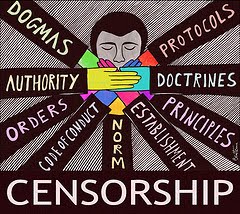
Journalism censorship is being brought to a whole new level. The Seattle School Board is considering to grant a proposal that would allow principles in the district to read high school news papers before they are printed and would be able to censor what they find disruptive to the schools learning environment.
With the news focusing on the Occupy protesters all around the United States, but in one location, photographers should be careful on their time spent covering the news photography.
In Washington D.C., due to a "decades old law", it is an arrestable offense to be taking a photograph in a public place for more than five minutes.
With this new law, it is giving police more power to arrest photographers, during these Occupy events. But fear not photojournalist, the National Press Photographers Association are asking the State attorney to repeal or revise this law and other ordinances that limit photography.
Works sited: Poynter.org
Picture sited: creativecommons.org
A Russian journalist, Mikhail Beketov, was nearly beaten to death in 2008 after investigating corruption in Khimki--a Moscow suburb; and is now, years later, being presented honors.
Beketov, currently recovering in an Israeli clinic, suffered severe brain damage--leaving him with an inability to speak in full sentences--the amputation of one of his legs, and the inability to use his hands after having his fingers bashed in. Even still, after receiving all of these injuries and coming out of a coma, Beketov was still required to appear in court to defend himself against slander charges.
Nevertheless, three years later, he is one of the recipients of an annual award for excellence in print journalism, bestowed by the Prime Minister of Russia--Vladimir Putin. And, while there is prize money granted with the award, it only totals to about 32,000 American dollars; which is no where near enough money to pay for Beketov's treatment, or the lasting physical/brain damage caused by his brutal beating.
Furthermore, according to the New York Times, the people who crippled Beketov--many of which are Russian government officials--are still roaming free.
Several of Beketov's friends and colleagues have spoken up about their beliefs that Beketov being awarded this prize is cynical. However, Dmitri Muratov, editor of the weekly newspaper Novaya Gazeta, who nominated Beketov, stressed that this prize is a state prize and that the money does not come from Putin personally.
Even still, there are still numerous doubts about the reasoning and the integrity behind Beketov's reception of the prize this year. The top human rights specialist from the United States State Department visited Beketov's colleagues near Khimki two weeks ago, promising to press the Russian government further on human rights.
When reading about situations such as these, I am that much happier that I am entering the field of journalism in America, where freedom of the press is truly a practice. However, it is also in reading stories such as this, that should serve as reminders to journalists, as well as the public, that as quickly as a freedom is granted, it can be taken away.
Beketov was simply investigating corruption, and now he has lost the function of a third of his brain. Current and aspiring journalists, as well as the American people, need to readily practice the First Amendment right of freedom of the press and question authority whenever necessary before it's too late.
Photo (Khimki Forest Construction): Courtesy of creativecommons.com
The famous 60 Minutes commentator Andy Rooney died Friday night at the age of 92 in a hospital in New York City.
He died of complications from minor surgery which was undisclosed.
"It's a sad day at '60 Minutes' and for everybody here at CBS News," said Jeff Fager, executive producer of "60 Minutes"and the chairman of CBS News.
© Blogger template On The Road by Ourblogtemplates.com 2009
Back to TOP