Climbing the Mountain Again

Tuesday, March 1, 2011


In the media world, the idea of ever-changing is as common as driving to work or school on a daily basis. Most journalists, I assume, would not have imagined having to use Twitter as an outlet for their daily jobs. Having to make transitions in any business can be a tough thing to do, especially when it comes to a job loss.


As a media student, I cringe when I see newspapers not being able to withstand the digital flow. Newspapers are one of the major types of medium that has been around since the 1800’s and now to see it start to fade is troubling for one who enjoys writing this much.


“Goodbye, Colorado.”


This was the headline that stood out on a February 2009 morning in Denver which froze many newspaper people to the core. The first major newspaper in America had died. Many believed that others, such as the San Francisco Chronicle and the Seattle Post-Intelligencer, would follow suit and crumble. They did not.


The reason for the fall is money. As Time magazine pointed out in a March 2009 article, Scripps Co. were the ones who were responsible for the avalanche of one Denver newspaper. Even though the paper was seeing an increase in circulation and advertising, those in charge in Cincinnati assumed that "it was the business model's fault."


So what are the journalists who got ran out of the Rocky Mountain News doing now?


Blogger John Temple of Temple Talk called around and asked how others were getting along since the Rocky's fall. Guess what he used to do? Own the paper himself under Scripps's supervision.


In a nutshell, those who are calling somewhere else other than Denver home are doing fine. In fact, most of them are doing well. Some of the emotions ex-Rockies are facing nowadays are appreciation of a job, newfound freedom, determination, and of course, anger and loss looking back.


Media will always be here for us. Granted, some companies may have to wither away now and then, but as long as news succumbs society, there will be a job somewhere, someway waiting for us students to grasp once we receive our diplomas.

Photo Credit: Ed Kohler via Flickr via Creative Commons

Read more...

WikiLeaks' Technology Groundbreaking?


A recent column over at TechnologyReview.com featured Jason Pontin talking about how WikiLeaks' lasting effects may be different from what many people assume.

Pontin doesn't believe WikiLeaks has a high probability of lasting very long in a world where it exposes powerful governments' secrets, but the new opportunities provided by their "secure drop box" have prompted others to use their methods in increasingly successful ways.

Pontin mentions how other organizations dedicated to leaking information (with less controversial and obstinate stances toward governments) are starting to use the drop box method with success. He believes even mainstream news organizations like Al Jazeera and The New York Times will begin using this method to get a lot more information out there that is relevant.

I would prefer to see more news and information being shared that is not thought up by a cable news network director or paparazzi or to fill up a portion of programming, but rather real news from real places that people wouldn't know about unless it was leaked.

If this drop box method ends up changing a lot of things I can see the job of a journalist in future years being more diverse as he or she seeks out what would be the most important story among thousands of anonymous submissions. That might not be a bad job to have at all.

Photo Credit: Oliver Tacke via Creative Commons

Read more...

Tuneful Journalism

As we all look into the future and contemplate where we would like to end up in our careers, one branch of journalism that is often overlooked is music journalism.


Like any other current event, social or political issue, or sports story, music is news too. Not only is music news, but there are endless aspects of the business that need to be covered.

The obvious components of the music industry that need to be reported on include awards shows, concert tours, new breakthrough sounds, and album releases. However, there is so much more to the industry.

Aspects of the music world such as new recording techniques, and covering issues regarding the industry itself are often overlooked.

In an article published by the Seattle Weekly the ups and downs of the music industry were portrayed.

Many music journalists can often be overwhelmed with new music to the point where it blurs together. After listening to so much they are not able to form good opinions on each new artist or sound.

As a result of this, it is important for music journalists to listen to each new track, record, or artist with an open mind. If journalists are constantly comparing new music to sounds they have already heard, the content of their writing becomes mostly negative.

Many music journalsits get tired of always critiquing. A main part of a music journalist's job is to listen to, and review new music. It becomes a very difficult job to fairly judge someone else's artistic ability and career work.

Many artists and journalists have expressed how hard interviews can be. In the article in the Seattle Weekly one artist was quoted as saying that they just get fed up with cut and dry interview questions. They made the point that if readers and journalists really care about their art form, they will ask questions that have deeper meaning.

So, as developing journalists, that is a point we need to keep in mind. Always do research before an interview no matter who you are interviewing. The interviewer will be much happier to answer deeper, more personal and relevant questions than questions that don't really matter.

Photo Credit: stuartpilbrow on Flickr via CreativeCommons

Read more...

What's Next?

Many of us are currently working towards a career in journalism, so what exactly can students do in preparation for entering the real world of journalism?


8 things college journalists should do before they graduate has a great list of ideas to get students started. Here are a few:

1. Blog- A blog shows potential employers one important thing: consistency. Employers will see that you can produce work on a consistent basis, and therefore will be a committed journalist down the road.

2. Get a new wardrobe- Many college students' wardrobe selection is anything but professional or appropriate for the working world. Invest in a professional looking outfit or two, especially if you are going into broadcasting.

3. Clean up your social network profiles- Be sure to delete any poor language or inappropriate photos on your Facebook or Twitter.

Employers often check the profiles of candidates, and anything they see and don't like could make or break a potential employee's chances of getting the job.

4. Talk to your professors- Professors often have connections to important people or jobs in the journalism business. Professors also make great references to use on resumes.

5. Create a portfolio- Gather together what you feel is the best work of your college career in journalism.

This could be anything dealing with internships or even stories featured in the campus newspaper. The portfolio will help in identifying your strengths and skills.

To check out the rest of the tips, click on this link. Photo Credit: Creative Commons

Read more...

Four Basic Facts to an Interview


When conducting an interview every beginning journalist asks the question: What do I need to know? There are four basic facts that every journalist needs to know prior to their first actual interview.

1. Have the right tools ready for the interview.
The tools that every journalist needs for an interview are a notebook and a recorder. A lot of journalists will say that it is a debate to which tool you'll need, but having both is ideal. It is very easy to start your recorder, hold it, and then throughout the interview take notes. This way you will have a back up plan if one of the methods fails, and you can be sure to get the story your source is conveying.

2. Make sure you are asking the right questions.
Each interview is different from the next. You aren't going to ask Micheal Jordan the same questions as Professor Steffen when you are interviewing them about the upcoming March Madness. This may require a little research prior to the interview, but will allow you to prepare questions for your upcoming interview.

3. Take great notes.
When interviewing you aren't able to ask your source to slow down, quit talking, or to repeat their last quote. Therefore you will need to learn how to take quick notes. This may require some practice. My suggestion is to watch some clips on YouTube, but try to take notes on the clips why watching. After taking those notes re-watch the clip and see how well you did.

4. Choose the best quotes.
The quotes are the heart of the story. As a reporter you will try to take notes of as many quotes as possible, but when writing you will not want to include every quote from the interview. Compare the quotes from your interview to your lead, and then decide which are most relevant to your lead. Those quotes with the most relevance are what you should include in your story.

Interviews are much easier then beginning journalists think. Just relax and remember these four basic facts. Then you will produce a great interview, which in turn will produce a great story.

Photo Credit: scragz, Flickr

Read more...

Social Media in Classrooms

Monday, February 28, 2011

In this day in age, professors have many options on how they should teach their classes. Journalism professors specifically get to use this to their advantage by applying social media in their own classroom. I will describe a few innovative methods of social media that professors are trying in the classroom. Keep in mind that not every tool mentioned will be appropriate for your class.


Facebook groups: This allows students to post ideas, links, videos and photos. The information that is posted on the group’s wall stays only between the members of that group. This tool is very beneficial because many students today already use Facebook. In other words, it doesn’t make a student go out of their way by having to remember a log-in or attend a class forum.
There are three different types of groups: open, closed and secret. “Open” groups are available to the public, “closed” groups keep content private but members within the group are allowed to see it and “secret” do not show up anywhere.
Group Blogs: This type of social media allows students to adapt to online writing and basic web publishing. Students can post assignments that let their teacher and classmates see.
1. Tumblr: A new fad that is simple and described to stand between Twitter feed and WordPress blog.
2. Posterous: This is similar to Tumblr, but has a few additional differences, being that it allows you to post text, photos or videos via e-mail. This allows students with a Smartphone to be able to blog at any time, any place.

Social Curation: Important tool that lets students collect social media information for their blogs or articles.
1. Storify/Keepstream are both designed around distinct compilation of content.
2. Curated.by: An ongoing curation. In other words, it covers live-events or long-term collaboration. This program is more highly looked upon because the privacy features allow limited access to certain projects.

Mind mapping: a program that arranges ideas based on their relationship to other elements through online collaboration.
1. MindMeister: The mind map tracks updates based on student’s opinions. For example, a professor asked his students to define journalism, multimedia and organize how each element related to each other. Mind map tracked the updates as the class discussed the definitions. This allows the students to interact together in class, instead of looking at the whiteboard.

Experimentation: Although some professors may find these tools not useful, it is important to at least try and experiment using new social media because it allows journalist students to apply themselves even further and improve their online abilities.

Photo Credit: Creativecommons.org

Read more...

Short and Sweet

One problem journalists face is adding additional words to their stories that they don't need. Excluding additional words keeps readers interested in the article.

Twitter is one of the newest form of technology that has helped the news industry. Since Twitter forces individuals to limit their thoughts to 140 characters, this has led them to shorten their thoughts in a more concise form of communication.

One common thing that happens is that people don't think before they write. This lack of preparation causes the writer to frantically drag on in their articles.

By rambling to an audience, readers will become bored and won't finish reading an article. Readers want the journalist to get to the point quickly.

An aid for journalists, is to read the written material before it is published and see if any unnecessary words can be eliminated. By revising the work, it will help readers to stay interested in the material.

The news industry is fast. Journalists want their material read and by revising their work, journalists might have an opportunity to compete within the fast-paced news industry.


photo credit:Max Chafkin, creativecommons.org

Read more...

Are You LinkedIn?

LinkedIn is one social networking site that we never hear about. The purpose of LinkedIn is to help business-oriented people connect.


There are many benefits to LinkedIn including groups that people can create and join. For example, if a company has an important meeting coming up an employee/employer can make a group to help promote it and remind other employees about the meeting.

One thing that many people use LinkedIn for is the many jobs that are listed on the site. People are able to search companies to find potential jobs.

LinkedIn is also a great way for a person to build connections with future employers, co-workers, and other business people.

One major benefit of LinkedIn is that it is free. There is no cost to join LinkedIn. Building connections with other business people can be a huge advantage in today's fast paced world.

Overall, LinkedIn promotes the user. The user decides what to put on the LinkedIn profile.
It's basically like an online resume. Users can post past jobs, recommendations, education and many other things.

The question is why aren't you signing up for a LinkedIn account right now?

Photo Credit: Jean Cummings via Creative Commons

Read more...

Awesome Tips for Acing an Interview

You may be acing your journalism classes with ease, but when it comes down to it, you're probably not going to get the job if you completely blow the interview. So here are a few tips to ensure that your interview goes well.

1. Know the day's news - one sure way to get your resume thrown into the "don't call" pile is by not knowing the current events going on. Make sure you wake up early enough to watch the news, read the newspaper, or any other way you use to obtain news of the day. This will save the awkwardness when they ask you, "What did you think of todays coverage?" and you have no response.

2. Know the competition - Sure it's essential that you know about the newsroom that you are applying for, but you also need to know what the competition is doing. This is useful for giving your imput about what you like and dislike.

3. Bring a copy of your resume - You may be thinking, "But I already sent them my resume and cover letter online why do I need to bring it in?" You're probably not the only resume that they recieved and they are recieving mass amounts of emails daily, so to ensure yours doesn't get lost in the pack, just bring it with you. Note about resume: Do not, I repeat not, have any typos.

4. Have an online portfolio - All journalists should have an online portfolio, especially those who work with multimedia, video, audio, graphics, etc. List the web address at the top of your resume, so they can pull it up before their meeting with you. If you show up with a flash drive, cd or something else, expect confused looks.

5. Have a Twitter account - You should always have an active Twitter account, especially if the position you're interviewing for relates to the web. Many newsrooms will excuse a use of a private facebook, but a candidate that does not use social media at all raises a red flag.

6. Bring ideas to the table - Newsrooms everywhere are looking for people who can help innovate and bring fresh ideas and perpsectives to the table. If you don't have at least a couple ways that may improve the newsroom, this can harm your chances of being chosen.

7. Remember soundbites - Journalists are busy people, so be sure to share your experiences and ideas in short soundbites, rather than long strung-out stories.

8. Have your own questions - One of the biggest interview killers is answering "No" when someone asks "Do you have any questions?" Have a few smart questions picked out, even if you already know the answer. It will make you sound more engaged and willing to learn. There are a lot of common questions asked like "Why do you want to work here?" "Where do you see yourself in five years?" or "What are your strengths and weaknesses". It is good to know what you are going to say, but don't rehearse it. It is easily spotted and creates the illusion that you can not think on your toes. On the otherhand, be ready to be thrown curveballs. Don't freak out; just take a few seconds, breathe and then answer. It's better to have a good answer than a quick one.


Read more...

The Art Of Recording

Sunday, February 27, 2011


When I got the assignment for my first story I was hesitant about getting a recorder for the event I was covering. I didn't know how vital they were.


I had to decide if I wanted to buy a recorder. For whatever reason I ended up buying a recorder and I am glad I did.


My first story was covering a meeting for a proposed wellness center. This event had a main speaker but several people in the audience contributed to the presentation.


Recorders are a journalsits secret weapon. They get everything that journalists can not.


There was no way I could have remembered everything or gotten all the details in my notes. The recorder saved me, especially when it came to quotes.


Most importantly it gets a person statement word for word which makes quoting someone much easier. Misquoting should never happen!


If you write articles I recommend having a recorder in order to make sure you get all the facts straight. And that makes you a more credible journalist.

Read more...

Apps On Smart Phones

With many people turning to online sources to receive their news, phone applications are great for journalists to add to their cell phones.

Phones are able to have applications if they are labeled as a smart phone. Smart phones have been a great addition to the journalism world because they have many applications that journalists can use for finding news or helping enhance their story.

By the end of 2011, it is predicted by many computer software companies that smart phone mobile devices will hold the dominant position in the wireless device market.

With the popularity of smart phones increasing, journalists should be aware of some of the applications that are offered free to them directly on their mobile device.

Qik- An application for users to capture live video directly off their phones and enables them to upload news or Kodak moments right to the web. Qik can also be used to chat live with others.

Wordpress- This application is a great way for journalists to do simple blogging, along with the ability to add pictures and videos to their posts. Wordpress also allows users to comment on other blogs posted, which is a great way for users to receive feedback and give advice to other users.

Photoshop Express- As the quality of cameras are increased on phones, this application benefits people that want to edit their photos directly on their mobile. Photoshop Express is also a great way to upload a picture directly to Twitter, Facebook, or your online blog.

VoiceTask- When covering a story, it has to be a huge bummer for journalists realizing they left their voice recorder at home. However, with this application, journalists are able to use the microphone right off their phone to record whatever they need to. Afterward, the conversation can be directly sent via e-mail from the phone by simply typing in an e-mail address.

While I have only listed just a few phone applications, there are thousands of different applications that are offered free or can be purchased on smart phones for many different purposes.

People that have a smart phone should take advantage of the benefits Linkthat come along with having one.

I have a Blackberry and enjoy the different things I am allowed to directly do from my mobile device for classes, writing, or entertainment.

Whether it's checking your grades on Scholar, reading news for our weekly quizzes in BNR, or using one of the applications I mentioned above, having a smart phone is a huge advantage when it comes to being a journalist.

Photo Credit: Bind Apple @ Creative Commons


Read more...

Cyber Society 2012?

Wednesday, February 23, 2011


Is our society becoming a cyber society? Do we even need real human contact when we have social media sites like Facebook, Twitter, blogs, etc.?

These past couple of Monday nights, I have had my eyes glued to the reality television show, "The Bachelor."

Now that you have stopped judging me, I have been using my Twitter account and tweeting what is happening on the show. I have gained many new followers and I follow many new followers. We all have one thing in common: our interest in Brad Womack, and whether he will choose a woman this time. (He better.)

This is part of a growing trend among many television watchers being connected to the Web.

People are connecting with other people over the internet feeling as if, they are all together in the same room.

A new social networking, entertainment website that is getting attention is GetGlue. Users 'check-in' to the entertainment that they are consuming and converse with other users . In my case I would talk about "The Bachelor" and how glad I am that Michelle is finally out of the picture.

60% of television viewers use smartphones, laptops or iPods, to be on a social network or browse the Web while watching.

With people spending so much time on online conversations, this could lead to future generations becoming antisocial.

But, this could also lead to future generations using a new communication skill.

Using these new tools, could help people become more socially savvy and participate in conversations in different areas online.

I have a group of girls on Twitter who I rely heavily on gossip, snarky remarks, and over all a conversation about "The Bachelor." We are being overtly social, but we are making friends and I definitely feel like there is no antisocial whatsoever in this community.

Photo Credit: Creative Commons

Read more...

Reasons to Blog

So as most of you all know midterms are happening right now. This of course means we have hit the half way mark. In our BNR class we have been blogging because it is an assignment and most of us probably don't want to fail so we just suck it up and write about something every week. Would any of us actually use this blog site if we were not forced to do it? Maybe yes, or maybe no, but there are reasons on why you should blog.


1. One reason to blog is that you can express yourself through your blog. Did you just watch a great movie and want to let others know about how fantastic it is? (Sanctum 3-D) Or maybe you want to rant about how outrageously high gas prices are. (Seriously, have you looked at them lately?) Whatever you want to say you can say it on your blog. This can help you stay connected with your friends or family who read your blog.

2. You can use your blog to market or promote something. I just promoted the movie Sanctum above. I also am promoting our BNR class by contributing to The News About The News.

3. Many blogs are written to be informative. This can range from helpful tips for interviews, how to take good pictures, or why to blog. By blogging about topics that are important to you, you can connect with people with similar views. Also, you can stay active or knowledeable about a variety of things.

4. The last reason I am going to give, is that by blogging you can get your name out there. It shows that you are "hip" with technology, and when somebody googles your name it will bring up your blog and show them what you are all about. By blogging about topics that are important to you, you will show them what matters to you. By blogging about your interests, it will show them what you find interesting or entertaining. Your blog will show them a better insight on you then perhaps your Facebook.

I hope that you will consider blogging after our BNR class is over.

Photo Credit: Via Creative Commons

Read more...

Tips for Hosting a Good Interview

An essential part of being a good journalist is having the ability to conduct a good interview. Without a good interview, the story that is created is likely to lack substance or a journalist will not be able to get all of the information they need for their story.

There are some basic ways in which, as a journalist, you can conduct a successful one-on-one interview for a story.

First thing's first: be prepared. Make sure you know some backgroud about the person you are interviewing if possible. For example, if you were to interview Mick Jagger, you would want to be aware of the fact that he was the lead singer of The Rolling Stones.

Next, make sure you have enough time to conduct the interview. Don't think that 5 minutes will be enough time for you to get a whole story. If you only have a short amount of time, make sure you use what time you have wisely: don't waste time on small talk, get right to the important questions.

Make sure that you are friendly, and try to make the person you are interviewing feel as comfortable as possible. If any of you have sat through a job interview or any interview of some sort, it can be a nervewracking experience. Also, the more that an interviewee feels comfortable with you the more likely it is that they will be open and honest during the interview.

Another thing to do, if possible, is to avoid "yes" or "no" questions. You will typically get much more information out of a person if you ask questions that require more than either of those for an answer.

Using a recorder can be helpful, but make sure you know the laws. Some states do not allow the use of a tape recorder at all in journalism. Others have laws requiring you to ask consent of the interviewee first.

Taking notes is incredibly important in an interview. Without it, it is likely that you will not remember important aspects for your story, and it will be nearly impossible to report correct quotations.

For more tips on interviewing, you can check out pages 78-81 in the textbook Inside Reporting: A Practical Guide to the Craft of Journalism by Tim Harrower or check out this website or simply Google-search "tips for conducting an interview".


Photo Credit: via Creative Commons

Read more...

China Continues To Be Unfriendly To Journalists


Fang Shimin, a Chinese journalist, was recently attacked by an unidentified assailant wielding a metal hammer. Fang escaped with minor injuries, but believes the attack is related to his work as a journalist.

Known in China as the "science cop," Fang concentrates on exposing flawed or weak scientific claims or research, fraudlent resumes and plagarism. He has received several threats.

"In an ideal world, some more formal and organized watchdogs ... professional organizations or a governmental agency would be in place," Fang said. "But China does not have these, so individual watchdogs become essential."

This attack followed a similar assault of Fang Xuanchang, an editor at Caijing magazine who has exposed multiple doctors promoting dubious miracle cures. He was beaten by two men while walking by his house in June. These two attacks are painful reminders that censorship is not the only risk facing journalists in China.

Fang Shimin, who writes under the pen name Fang Zhouzi, is a rare example of a journalist in China. "Fang Zhouzi touches upon power and business and the officials who support those businesses, because with any business, behind it there are officials in support," says Li Datong, former editor of Freezing Point. "So it's a matter of facing up to power. Chinese media, generally speaking, don't do a good job of this."

China is the leader in terms of jailing journalists; 24 were put in prison last year according to the Committee to Protect Journalists. It also ranks near the bottom of the annual index of press freedom, complied by Reporters Without Borders.

Beijing police are investigating both attacks, but no arrests have been made so far. The attacks continue to contribute to the culture of fear that journalists and other whistle-blowers encounter.

"I will continue what I am doing," Fang Shimin said. "And of course I will take some security measures."
Photo Credit: CreativeCommons.org

Read more...

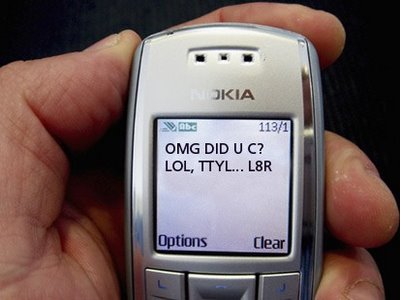
Txting Leading 2 Bad Spelling & Grammar?

It is hated by parents and teachers alike- text lingo.

Many of today's teens use short abbreviations and acronyms in most of their messages, enfuriating teachers who insist texting has led to a decrease in spelling and grammar skills.

A recent study focused on the question of whether or not the use of texting language impacted a student's spelling and grammar in school work.

The study found that school work was not affected due to the fact that students were able to identify the certain situations in which it was appropriate to use texting language.

Students easily differentiate between when a formal style of writing is needed, such as for a school essay, and when an informal style can be used, such as in texting. Essentially, texting is kept strictly in the texting world.

If a student does use texting lingo in their school work, often only a warning against doing so is needed for them to correct the problem.

If teachers enforce and are strict about not using texting language, there should be no problem at all with students using it.

As texting users are getting younger and younger, it is also important for teachers to make sure they teach their students at an early age proper grammar and spelling skills.

For more information on the study and how texting has benefited users, visit this link.

Read more...

The Effects of Media on Politicians

Media and politicians are close. Indeed, some politicians are partners or owners of television stations, newspapers or radio stations.

What effects media could have on the image of politicians? Media are powerful and can shape a person and destroy her a few moments later. It is common for major television networks to support a candidate one day and press him down in the polls the next day.

Sarah Palin is a perfect example of the unstable relationship between politicians and media. She became famous because media have started talking about her and they have shaped the image of an engaging, smiling and determined Sarah Palin.

But a few months later, after some media excesses, the image of Sarah Palin in media has completely changed. Media have changed the vision people should have about the governor of Alaska. This is what we call in communication the "magic bullet" theory: an immediate attitude change about something or someone created by media.

This phenomenon is not unique to the United States of America. Europe is also affected by this theory. The example of Nicolas Sarkozy in France is a proof. The French president, adored by the press during the first months of his term, will be decried little by little until becoming the "Bad Guy of the Republic" as called in the magazine Marianne.

Media could be a wonderful springboard to glory but can also be those that push you towards the exit.


Photo Credit: www.Liberation.fr via creativecommons.org
Translation from left to right: Marianne: "The Bad Guy of the Republic"; Le Point: "Is He so Lame?"; Le Nouvel Observateur: "Is this Man Dangerous?"

Read more...

Checking the Ethical Component of a Story

In an article discussing the new frontier in ethical journalism, Ghanaian journalist Prosper Yao Tsikata lays out four rules for making sure a story is morally ripe for publication.


The four criteria he describes are preponderance to evidence, the filtering process, the crystallizing evolution and finally, disgorgement.

In order to satisfy Preponderance to Evidence, Tsikata urges journalists to check and double check sources-- especially given the consideration that today, there are vast sources like the internet that can't always be taken at face-value.

Tsikata says that one of the most important steps in this process, especially when considering high-profile public figures, is "contacting the individual(s) involved in the issues and checking with them or their inner circles." Had the many journalists mistakenly reporting that Gabrielle Giffords had died checked within her inner circle, it is likely that they wouldn't have made such a serious mistake.

The second step is the Filtering Process. Here, journalists should flesh out their story and pay attention to whether or not the facts they have acquired follow logically from each other. They should fill in as many gaps in the logic as they can by doing their own fact-checking: comparing dates and financial figures, examining individuals involved, etc.

In the third step, which Tsikata calls the Crystallizing Evolution, journalists should act as utilitarians, and make sure that the benefits of releasing the story outweigh any personal issues surrounding the subject of the story. This consideration should have been applied to the recent situation regarding Steve Jobs' health- many journalists and shareholders took the stance that Jobs' health status should be available to the public at large. To me, and seemingly to Tsikata as well, Jobs' health is a personal issue and an ethical journalist would consider it as such.

Finally, Tsikata calls for journalists to consider Disgorgement. For Tsikata, the word means that once the beans are spilled and the full story is out, journalists should take back any statements that have proved to be inaccurate. Disgorgement is a bit of an unconventional term since it is usually applied to unethical gains in economics, but Tsikata successfully applies it to journalism.

It is important to distinguish between the positive properties of transparency in journalism and politics and the ethical dilemma that comes from trying to apply this same transparency to the lives of individuals. Tsikata's guide is helpful in this regard because it delineates ethical boundaries in journalism.

Photo credit: LucasBean.com via CreativeCommons.org

Read more...

Pay for Online News Content

Tuesday, February 22, 2011


An article recently appeared on Brandrepublic about how the Telegraph, a popular news source in the UK, is planning on revamping its website, possibly including both free and paid-for content at the same time.

The idea is that those browsing the site without a paid subscription would be able to get at least a general sense of the news, but to receive further details they would have to pay. It is believed this "hybrid" method of news website management would be more effective than a completely free or a completely subscription based service.

While I consider this method better than a complete subscription to view any content like The Daily, I still think a system like this will be relatively unsuccessful as long as other services provide completely free content on the web.

I can see this doing nothing but whetting the appetite of someone who wants to know more about an issue, forcing them to go looking for it at another website with open content. I guess we'll just have to see how this works out, though. I can see online journalism evolving in a couple of different ways, but I don't think this one will work very well in the long term.

Photo Credit: Joe Anderson via Creative Commons

Read more...

Tips on Becoming a Better Newswriter

Starting out as a journalist can be very tricky. You may have found the perfect story and have done all of your research and interviews BUT all your hardwork and time may be wasted if you write a boring article that nobody wants to read. To ensure that your hardwork and dedication to the story of your choice shines out, here are a couple helpful tips to improve your newswriting.


1. Always use killer headlines - You must, must, must capture the readers attention if you even want them to skim your article, let alone read the details. To make this happen, get to the point and make it interesting. Give them an idea of what you're going to be talking about, but make them want to know more.

2. Choose your stories wisely - Obviously, people aren't going to spend time reading your article if it's something they find excruciatingly boring and uninteresting. "Stepped in dog poo today" - nobody cares. "Pack of dogs attack teen" - more interesting. Now it doesn't have to be violent, it just has to be something interesting and/or have a direct impact on your readers' lives.

3. Inverted pyramid...enough said. - Your audience is pressed for time; they don't want to sit there all day and wait for you to get to the point. To make sure they get a clear picture, give them the juiciest details in the first paragraph. Save the supporting details for later paragraphs.

4. Mind your grammar - You want people to take you seriously, so try to use correct grammar in your blogs. No professional is going to want to read your "text talk", or at least take what you have to say seriously.

Hopefully these tips have given you a good start on your newswriting. For a different approach and more structural ways on how to build a good story visit: http://journalism.about.com/od/writing/tp/Newswriting.htm.
Photo Credit: CreativeCommons, user: john_a_ward

Read more...

Save Green, Be Green

Monday, February 21, 2011

Even though mobile devices may cost you a lot of green, they still play a major role in society. What if I was to tell you that having a mobile device can also help you save a lot of money by going green?

One way of going green is by using the app Avego, which is a ride-sharing app for the iPhone that lets you offer empty seats in your car to others and search for open seats when you are car-less. When this app is open and in use, you are able to receive updates on how far away your ride is.

This app also computes how much money each person in the car owes for gas. Users of this program create a profile that becomes available to public. After doing so, members are allowed to rate other members based on their experience.

Another app available is Findgreen by 3rdWhaleMobile’s. This app gives GPS-equipped BlackBerry, iPhone and Android Smartphone owners a guide to local retailers and services that are stored within the GenGreen’s Green Business Directory. A downfall to this app is that not all listings in the area are available.

Ipad and iPhone users who already have wired their home to dim the lights and turn the heating on from a distance are getting the opportunity to save energy with a touch of a button. Lutron’s Home Control app lets RadioRA 2 or HomeWorks QS users control their lights, heating and window shades with the use of their iPhone or iPad.

MyHome app, by Control4, allows users to control their lights, heat and window shades as well as home entertainment and security systems. This app works for the iPhone, iPad and eventually the Android.

Lastly, there is an app called MeterRead which allows users to control the energy consumption and subsequent savings by recording your homes electric meter readings and suggesting ways to improve efficiency.

These apps will not only benefit the users but the environment as well.

Unfortunately, these apps are not accessible to everybody because not everyone has an iPhone, iPad, BlackBerry or Android.

Soon enough, apps similar to these will be available for everyone and allow society to save personally and environmentally.

Photo Credit: Creative Commons

Read more...

Is It A Newspaper Or A Magazine


On February 2, 2011 The Daily for the Apple iPad was launched.


The Daily has promoted itself as a newspaper exclusively for the iPad. Each day new articles are published and put out just like a print newspaper.


An iPad user downloads the app and pays 99 cents per week or a year subscription for $39.99. Then the user is set to read to his or her heart's content.


It has been speculated however that The Daily is not a newspaper but a magazine. These claims have been based on visuals more present than text.


In my opinion The Daily is neither one. Both newspapers and magazines have a large amount of context bewteen the pages.


An issue of The Daily only has a handful of stories. And once those stories are gone they are gone unlike newspapers and magazines which can have stories from months or years gone by.


To me The Daily is ridiculous, why pay for news when it can be read online for free with an unlimited amount of stories?


I feel this application is really just a bulletin highlighting a few stories.


What's your take?
Photo Credit: Creative Commons

Read more...

The 21st Century Bookstore

Many of us have been in a bookstore before. Barnes and Noble is a great example of a bookstore that offers current novels and magazines to a broad range of people.

Upon walking in, customers are bombarded by all of the products that they can willingly buy. Though the store is organized in a fashionable way, what if it all was digital?

There still would be comfy chairs to sit in, but the space the magazines and books take up would be eliminated. Customers could easily browse through the products with their smartphone, or other form of technology that they are equipped with.

By making the bookstores more technology oriented, customers would have more options to choose from. Customers today are finding that looking for books online offers them more of a selection than if they were to visit a bookstore.

Customers would also have the advantage of reading through books and magazines, just like the Bookstore offered, but it would all be digital. Customers of course would have to stay within the proximity of the store to receive these benefits, but it would still be worth the change.

By making Bookstores more digital, consumers are more apt to purchase magazines and books. Making Bookstores digital is one of the keys to keeping the media industry afloat.


photocredit: http://is.gd/aqVNEJ, creativecommons.com

Read more...

Digital Resumes on the Rise

People often ask one thing when going to a job interview. Is my resume put together well enough to show who I really am? Today, there are even more options for resumes than the regular typed up paper that's typically turned in by hopeful applicants.


The most recent version of the resume includes graphics of all types. Applicants can personalize their resumes to fit their specific job. One resume on Mashable's site, pictured to the left, is personalized to the restaurant business, and the resume is designed to look like a menu. These types of resumes are called digital resumes.

Digital resumes stand out from the ordinary resume. The bright colors and different layout make the person's eyes wander all over the page reading every detail. It's more interesting to look at than a plain white paper with black text.

These types of resumes also show the employer that the applicant wants the job bad enough that he/she took the time to personalize the resume to fit the job. This can often make an employer choose this more pleasing to the eye digital resume over the ordinary resume. Employers may often think if he/she took this much time to work on their resume imagine how hard he/she will work on the job.

I plan on editing my resume after seeing all these attractive resumes. My resume will not only look the best out of all the other applicants I will be going up against for future jobs, but it will also look pretty cool, and employers will be impressed with my determination to impress them.

Photo Credit: Jason Takeuchi via Mashable

Read more...

How to be a Successful Blogger

Being a successful blogger can be an important part of your profession today. Jack Harold the CEO of Affiliate Home Business offers some tips to being a successful blogger on the blog of Jonathon Volk.

1. Check Your Stats
Your blog statistics are a valuable part of your blog.

2. What if People Don't Want to Read My Blog
Readers are very important to your blog's livelihood.

3. There Are Blogs Just Like Mine
Topics are common, yours is already covered?

4. Be Creative
Who cares if your topic is covered, making your blog more creative and unique will get readers.

Read more...

  © Blogger template On The Road by Ourblogtemplates.com 2009

Back to TOP