Cyber Society 2012?

Wednesday, February 23, 2011


Is our society becoming a cyber society? Do we even need real human contact when we have social media sites like Facebook, Twitter, blogs, etc.?

These past couple of Monday nights, I have had my eyes glued to the reality television show, "The Bachelor."

Now that you have stopped judging me, I have been using my Twitter account and tweeting what is happening on the show. I have gained many new followers and I follow many new followers. We all have one thing in common: our interest in Brad Womack, and whether he will choose a woman this time. (He better.)

This is part of a growing trend among many television watchers being connected to the Web.

People are connecting with other people over the internet feeling as if, they are all together in the same room.

A new social networking, entertainment website that is getting attention is GetGlue. Users 'check-in' to the entertainment that they are consuming and converse with other users . In my case I would talk about "The Bachelor" and how glad I am that Michelle is finally out of the picture.

60% of television viewers use smartphones, laptops or iPods, to be on a social network or browse the Web while watching.

With people spending so much time on online conversations, this could lead to future generations becoming antisocial.

But, this could also lead to future generations using a new communication skill.

Using these new tools, could help people become more socially savvy and participate in conversations in different areas online.

I have a group of girls on Twitter who I rely heavily on gossip, snarky remarks, and over all a conversation about "The Bachelor." We are being overtly social, but we are making friends and I definitely feel like there is no antisocial whatsoever in this community.

Photo Credit: Creative Commons

Read more...

Reasons to Blog

So as most of you all know midterms are happening right now. This of course means we have hit the half way mark. In our BNR class we have been blogging because it is an assignment and most of us probably don't want to fail so we just suck it up and write about something every week. Would any of us actually use this blog site if we were not forced to do it? Maybe yes, or maybe no, but there are reasons on why you should blog.


1. One reason to blog is that you can express yourself through your blog. Did you just watch a great movie and want to let others know about how fantastic it is? (Sanctum 3-D) Or maybe you want to rant about how outrageously high gas prices are. (Seriously, have you looked at them lately?) Whatever you want to say you can say it on your blog. This can help you stay connected with your friends or family who read your blog.

2. You can use your blog to market or promote something. I just promoted the movie Sanctum above. I also am promoting our BNR class by contributing to The News About The News.

3. Many blogs are written to be informative. This can range from helpful tips for interviews, how to take good pictures, or why to blog. By blogging about topics that are important to you, you can connect with people with similar views. Also, you can stay active or knowledeable about a variety of things.

4. The last reason I am going to give, is that by blogging you can get your name out there. It shows that you are "hip" with technology, and when somebody googles your name it will bring up your blog and show them what you are all about. By blogging about topics that are important to you, you will show them what matters to you. By blogging about your interests, it will show them what you find interesting or entertaining. Your blog will show them a better insight on you then perhaps your Facebook.

I hope that you will consider blogging after our BNR class is over.

Photo Credit: Via Creative Commons

Read more...

Tips for Hosting a Good Interview

An essential part of being a good journalist is having the ability to conduct a good interview. Without a good interview, the story that is created is likely to lack substance or a journalist will not be able to get all of the information they need for their story.

There are some basic ways in which, as a journalist, you can conduct a successful one-on-one interview for a story.

First thing's first: be prepared. Make sure you know some backgroud about the person you are interviewing if possible. For example, if you were to interview Mick Jagger, you would want to be aware of the fact that he was the lead singer of The Rolling Stones.

Next, make sure you have enough time to conduct the interview. Don't think that 5 minutes will be enough time for you to get a whole story. If you only have a short amount of time, make sure you use what time you have wisely: don't waste time on small talk, get right to the important questions.

Make sure that you are friendly, and try to make the person you are interviewing feel as comfortable as possible. If any of you have sat through a job interview or any interview of some sort, it can be a nervewracking experience. Also, the more that an interviewee feels comfortable with you the more likely it is that they will be open and honest during the interview.

Another thing to do, if possible, is to avoid "yes" or "no" questions. You will typically get much more information out of a person if you ask questions that require more than either of those for an answer.

Using a recorder can be helpful, but make sure you know the laws. Some states do not allow the use of a tape recorder at all in journalism. Others have laws requiring you to ask consent of the interviewee first.

Taking notes is incredibly important in an interview. Without it, it is likely that you will not remember important aspects for your story, and it will be nearly impossible to report correct quotations.

For more tips on interviewing, you can check out pages 78-81 in the textbook Inside Reporting: A Practical Guide to the Craft of Journalism by Tim Harrower or check out this website or simply Google-search "tips for conducting an interview".


Photo Credit: via Creative Commons

Read more...

China Continues To Be Unfriendly To Journalists


Fang Shimin, a Chinese journalist, was recently attacked by an unidentified assailant wielding a metal hammer. Fang escaped with minor injuries, but believes the attack is related to his work as a journalist.

Known in China as the "science cop," Fang concentrates on exposing flawed or weak scientific claims or research, fraudlent resumes and plagarism. He has received several threats.

"In an ideal world, some more formal and organized watchdogs ... professional organizations or a governmental agency would be in place," Fang said. "But China does not have these, so individual watchdogs become essential."

This attack followed a similar assault of Fang Xuanchang, an editor at Caijing magazine who has exposed multiple doctors promoting dubious miracle cures. He was beaten by two men while walking by his house in June. These two attacks are painful reminders that censorship is not the only risk facing journalists in China.

Fang Shimin, who writes under the pen name Fang Zhouzi, is a rare example of a journalist in China. "Fang Zhouzi touches upon power and business and the officials who support those businesses, because with any business, behind it there are officials in support," says Li Datong, former editor of Freezing Point. "So it's a matter of facing up to power. Chinese media, generally speaking, don't do a good job of this."

China is the leader in terms of jailing journalists; 24 were put in prison last year according to the Committee to Protect Journalists. It also ranks near the bottom of the annual index of press freedom, complied by Reporters Without Borders.

Beijing police are investigating both attacks, but no arrests have been made so far. The attacks continue to contribute to the culture of fear that journalists and other whistle-blowers encounter.

"I will continue what I am doing," Fang Shimin said. "And of course I will take some security measures."
Photo Credit: CreativeCommons.org

Read more...

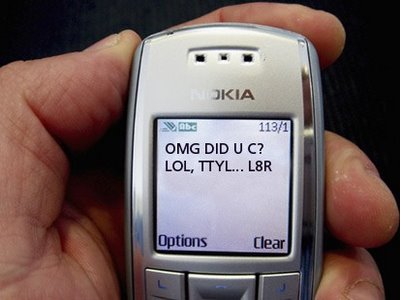
Txting Leading 2 Bad Spelling & Grammar?

It is hated by parents and teachers alike- text lingo.

Many of today's teens use short abbreviations and acronyms in most of their messages, enfuriating teachers who insist texting has led to a decrease in spelling and grammar skills.

A recent study focused on the question of whether or not the use of texting language impacted a student's spelling and grammar in school work.

The study found that school work was not affected due to the fact that students were able to identify the certain situations in which it was appropriate to use texting language.

Students easily differentiate between when a formal style of writing is needed, such as for a school essay, and when an informal style can be used, such as in texting. Essentially, texting is kept strictly in the texting world.

If a student does use texting lingo in their school work, often only a warning against doing so is needed for them to correct the problem.

If teachers enforce and are strict about not using texting language, there should be no problem at all with students using it.

As texting users are getting younger and younger, it is also important for teachers to make sure they teach their students at an early age proper grammar and spelling skills.

For more information on the study and how texting has benefited users, visit this link.

Read more...

The Effects of Media on Politicians

Media and politicians are close. Indeed, some politicians are partners or owners of television stations, newspapers or radio stations.

What effects media could have on the image of politicians? Media are powerful and can shape a person and destroy her a few moments later. It is common for major television networks to support a candidate one day and press him down in the polls the next day.

Sarah Palin is a perfect example of the unstable relationship between politicians and media. She became famous because media have started talking about her and they have shaped the image of an engaging, smiling and determined Sarah Palin.

But a few months later, after some media excesses, the image of Sarah Palin in media has completely changed. Media have changed the vision people should have about the governor of Alaska. This is what we call in communication the "magic bullet" theory: an immediate attitude change about something or someone created by media.

This phenomenon is not unique to the United States of America. Europe is also affected by this theory. The example of Nicolas Sarkozy in France is a proof. The French president, adored by the press during the first months of his term, will be decried little by little until becoming the "Bad Guy of the Republic" as called in the magazine Marianne.

Media could be a wonderful springboard to glory but can also be those that push you towards the exit.


Photo Credit: www.Liberation.fr via creativecommons.org
Translation from left to right: Marianne: "The Bad Guy of the Republic"; Le Point: "Is He so Lame?"; Le Nouvel Observateur: "Is this Man Dangerous?"

Read more...

Checking the Ethical Component of a Story

In an article discussing the new frontier in ethical journalism, Ghanaian journalist Prosper Yao Tsikata lays out four rules for making sure a story is morally ripe for publication.


The four criteria he describes are preponderance to evidence, the filtering process, the crystallizing evolution and finally, disgorgement.

In order to satisfy Preponderance to Evidence, Tsikata urges journalists to check and double check sources-- especially given the consideration that today, there are vast sources like the internet that can't always be taken at face-value.

Tsikata says that one of the most important steps in this process, especially when considering high-profile public figures, is "contacting the individual(s) involved in the issues and checking with them or their inner circles." Had the many journalists mistakenly reporting that Gabrielle Giffords had died checked within her inner circle, it is likely that they wouldn't have made such a serious mistake.

The second step is the Filtering Process. Here, journalists should flesh out their story and pay attention to whether or not the facts they have acquired follow logically from each other. They should fill in as many gaps in the logic as they can by doing their own fact-checking: comparing dates and financial figures, examining individuals involved, etc.

In the third step, which Tsikata calls the Crystallizing Evolution, journalists should act as utilitarians, and make sure that the benefits of releasing the story outweigh any personal issues surrounding the subject of the story. This consideration should have been applied to the recent situation regarding Steve Jobs' health- many journalists and shareholders took the stance that Jobs' health status should be available to the public at large. To me, and seemingly to Tsikata as well, Jobs' health is a personal issue and an ethical journalist would consider it as such.

Finally, Tsikata calls for journalists to consider Disgorgement. For Tsikata, the word means that once the beans are spilled and the full story is out, journalists should take back any statements that have proved to be inaccurate. Disgorgement is a bit of an unconventional term since it is usually applied to unethical gains in economics, but Tsikata successfully applies it to journalism.

It is important to distinguish between the positive properties of transparency in journalism and politics and the ethical dilemma that comes from trying to apply this same transparency to the lives of individuals. Tsikata's guide is helpful in this regard because it delineates ethical boundaries in journalism.

Photo credit: LucasBean.com via CreativeCommons.org

Read more...

Pay for Online News Content

Tuesday, February 22, 2011


An article recently appeared on Brandrepublic about how the Telegraph, a popular news source in the UK, is planning on revamping its website, possibly including both free and paid-for content at the same time.

The idea is that those browsing the site without a paid subscription would be able to get at least a general sense of the news, but to receive further details they would have to pay. It is believed this "hybrid" method of news website management would be more effective than a completely free or a completely subscription based service.

While I consider this method better than a complete subscription to view any content like The Daily, I still think a system like this will be relatively unsuccessful as long as other services provide completely free content on the web.

I can see this doing nothing but whetting the appetite of someone who wants to know more about an issue, forcing them to go looking for it at another website with open content. I guess we'll just have to see how this works out, though. I can see online journalism evolving in a couple of different ways, but I don't think this one will work very well in the long term.

Photo Credit: Joe Anderson via Creative Commons

Read more...

Tips on Becoming a Better Newswriter

Starting out as a journalist can be very tricky. You may have found the perfect story and have done all of your research and interviews BUT all your hardwork and time may be wasted if you write a boring article that nobody wants to read. To ensure that your hardwork and dedication to the story of your choice shines out, here are a couple helpful tips to improve your newswriting.


1. Always use killer headlines - You must, must, must capture the readers attention if you even want them to skim your article, let alone read the details. To make this happen, get to the point and make it interesting. Give them an idea of what you're going to be talking about, but make them want to know more.

2. Choose your stories wisely - Obviously, people aren't going to spend time reading your article if it's something they find excruciatingly boring and uninteresting. "Stepped in dog poo today" - nobody cares. "Pack of dogs attack teen" - more interesting. Now it doesn't have to be violent, it just has to be something interesting and/or have a direct impact on your readers' lives.

3. Inverted pyramid...enough said. - Your audience is pressed for time; they don't want to sit there all day and wait for you to get to the point. To make sure they get a clear picture, give them the juiciest details in the first paragraph. Save the supporting details for later paragraphs.

4. Mind your grammar - You want people to take you seriously, so try to use correct grammar in your blogs. No professional is going to want to read your "text talk", or at least take what you have to say seriously.

Hopefully these tips have given you a good start on your newswriting. For a different approach and more structural ways on how to build a good story visit: http://journalism.about.com/od/writing/tp/Newswriting.htm.
Photo Credit: CreativeCommons, user: john_a_ward

Read more...

Save Green, Be Green

Monday, February 21, 2011

Even though mobile devices may cost you a lot of green, they still play a major role in society. What if I was to tell you that having a mobile device can also help you save a lot of money by going green?

One way of going green is by using the app Avego, which is a ride-sharing app for the iPhone that lets you offer empty seats in your car to others and search for open seats when you are car-less. When this app is open and in use, you are able to receive updates on how far away your ride is.

This app also computes how much money each person in the car owes for gas. Users of this program create a profile that becomes available to public. After doing so, members are allowed to rate other members based on their experience.

Another app available is Findgreen by 3rdWhaleMobile’s. This app gives GPS-equipped BlackBerry, iPhone and Android Smartphone owners a guide to local retailers and services that are stored within the GenGreen’s Green Business Directory. A downfall to this app is that not all listings in the area are available.

Ipad and iPhone users who already have wired their home to dim the lights and turn the heating on from a distance are getting the opportunity to save energy with a touch of a button. Lutron’s Home Control app lets RadioRA 2 or HomeWorks QS users control their lights, heating and window shades with the use of their iPhone or iPad.

MyHome app, by Control4, allows users to control their lights, heat and window shades as well as home entertainment and security systems. This app works for the iPhone, iPad and eventually the Android.

Lastly, there is an app called MeterRead which allows users to control the energy consumption and subsequent savings by recording your homes electric meter readings and suggesting ways to improve efficiency.

These apps will not only benefit the users but the environment as well.

Unfortunately, these apps are not accessible to everybody because not everyone has an iPhone, iPad, BlackBerry or Android.

Soon enough, apps similar to these will be available for everyone and allow society to save personally and environmentally.

Photo Credit: Creative Commons

Read more...

Is It A Newspaper Or A Magazine


On February 2, 2011 The Daily for the Apple iPad was launched.


The Daily has promoted itself as a newspaper exclusively for the iPad. Each day new articles are published and put out just like a print newspaper.


An iPad user downloads the app and pays 99 cents per week or a year subscription for $39.99. Then the user is set to read to his or her heart's content.


It has been speculated however that The Daily is not a newspaper but a magazine. These claims have been based on visuals more present than text.


In my opinion The Daily is neither one. Both newspapers and magazines have a large amount of context bewteen the pages.


An issue of The Daily only has a handful of stories. And once those stories are gone they are gone unlike newspapers and magazines which can have stories from months or years gone by.


To me The Daily is ridiculous, why pay for news when it can be read online for free with an unlimited amount of stories?


I feel this application is really just a bulletin highlighting a few stories.


What's your take?
Photo Credit: Creative Commons

Read more...

The 21st Century Bookstore

Many of us have been in a bookstore before. Barnes and Noble is a great example of a bookstore that offers current novels and magazines to a broad range of people.

Upon walking in, customers are bombarded by all of the products that they can willingly buy. Though the store is organized in a fashionable way, what if it all was digital?

There still would be comfy chairs to sit in, but the space the magazines and books take up would be eliminated. Customers could easily browse through the products with their smartphone, or other form of technology that they are equipped with.

By making the bookstores more technology oriented, customers would have more options to choose from. Customers today are finding that looking for books online offers them more of a selection than if they were to visit a bookstore.

Customers would also have the advantage of reading through books and magazines, just like the Bookstore offered, but it would all be digital. Customers of course would have to stay within the proximity of the store to receive these benefits, but it would still be worth the change.

By making Bookstores more digital, consumers are more apt to purchase magazines and books. Making Bookstores digital is one of the keys to keeping the media industry afloat.


photocredit: http://is.gd/aqVNEJ, creativecommons.com

Read more...

Digital Resumes on the Rise

People often ask one thing when going to a job interview. Is my resume put together well enough to show who I really am? Today, there are even more options for resumes than the regular typed up paper that's typically turned in by hopeful applicants.


The most recent version of the resume includes graphics of all types. Applicants can personalize their resumes to fit their specific job. One resume on Mashable's site, pictured to the left, is personalized to the restaurant business, and the resume is designed to look like a menu. These types of resumes are called digital resumes.

Digital resumes stand out from the ordinary resume. The bright colors and different layout make the person's eyes wander all over the page reading every detail. It's more interesting to look at than a plain white paper with black text.

These types of resumes also show the employer that the applicant wants the job bad enough that he/she took the time to personalize the resume to fit the job. This can often make an employer choose this more pleasing to the eye digital resume over the ordinary resume. Employers may often think if he/she took this much time to work on their resume imagine how hard he/she will work on the job.

I plan on editing my resume after seeing all these attractive resumes. My resume will not only look the best out of all the other applicants I will be going up against for future jobs, but it will also look pretty cool, and employers will be impressed with my determination to impress them.

Photo Credit: Jason Takeuchi via Mashable

Read more...

How to be a Successful Blogger

Being a successful blogger can be an important part of your profession today. Jack Harold the CEO of Affiliate Home Business offers some tips to being a successful blogger on the blog of Jonathon Volk.

1. Check Your Stats
Your blog statistics are a valuable part of your blog.

2. What if People Don't Want to Read My Blog
Readers are very important to your blog's livelihood.

3. There Are Blogs Just Like Mine
Topics are common, yours is already covered?

4. Be Creative
Who cares if your topic is covered, making your blog more creative and unique will get readers.

Read more...

Egypt: Is it Too Dangerous for Journalists?

Sunday, February 20, 2011

Over the past couple of weeks the events taking place in Egypt and Tunisia have been consuming news headlines.


Along with the political upheaval going on in Egypt, a major issue facing the news world is the safety of American and other foreign journalists.

Making headlines this week was the sexual assault of American CBS reporter Lara Logan. In many articles including an writeup on The Examiner.com have uncovered the details of her assault and other journalist related violence.

Logan was assaulted in the midst of the political revolts in Egypt on February 11 at around 1 a.m. The assault occurred moments after President Hosni Mubarak had officially stepped down.

New reports say that Logan was beaten, stripped of her clothing, pinched, and whipped as they shouted "jew" and "Israeli."

Sources are now saying the Logan narrowly escaped rape with the help of a group of Egyptian women that intervened along with help from Egyptian soldiers.

Logan is not alone. Since the beginning of the revolts in Egypt 140 journalists have been killed or injured while reporting on the events taking place there.

Logan's relatives and friends have said that the emotional and mental wounds are worse than her physical injuries. She is currently recovering in her home in Washington D.C.


Photo Credit: Ruth Fremson/The New York Times via Creative Commons

Read more...

Eyes are Everywhere


A Pennsylvania high school teacher was suspended from her job after placing angry, unprofessional blog posts about her students on the Internet.


Natalie Munroe, an English teacher at Central Bucks East High School, vented her frustration in her blog about some of her "utterly loathsome" students saying remarks such as they are "rude, disengaged, lazy whiners." In another post she professes "There's no other way to say this: I hate your kid."

Her attorney, Steve Rovner, says legally his client's school district doesn't have any policy in place that states what teachers can and cannot do online. He also stated Munroe did not name the school, nor her students, in her posts.

Munroe is now in the middle of a heated online debate over whether teachers are actually to blame for the problems in the current education system, as well as the boundaries on freedom of speech all together.

"It's a First Amendment issue," Rovner says. "And it's an unresolved area of the law." Also uncertain is when the online frenzy will die down on this subject as a number of national and international publications are relaying the story.

On one side of this debate, some see Munroe's comments as a systematic rundown of the dire challenges facing America's overburdened teachers. The other side sees just the kind of attitude problem that can ultimately lead students adrift in the classroom.

"The perception is that everything is the teachers' fault," says Munroe, "but teachers can only work within the system that is in place."

So, what do you think? Were Natalie Munroe's blog posts ultimately out of line? Is the perception of today's teachers a fair one?

I think instead of venting about how bad her students are she could try working with them some more to help them if she hasn't already. At the same time I remember how bad some students were in high school and it can be a harsh reality for teachers in the 21th century classroom. It is, however, undoubtedly naive to believe that a blog can be anonymous in the year 2011 as she believed it to be.

Any words said over the Internet are available for anyone and everyone to see.

Photo Credit: blippitt.com from Creative Commons


Read more...

Real Post about Fake News


The responsibility of news reporting is to keep people informed of their surroundings and how to react. The best news companies rely on timeliness and accuracy, and in return, those viewers/readers give those news organizations the respect and trust it deserves.


In return, what kind of feedback should fake (satrical) news get? Those who report news to be funny and make fun of a real story try to get attention in a controversial or slanted way. Since they are trying to rattle someone's cage, those who are less caring about the news will not be as disturbed as one who is engaged with "real news."


One of the most famous fake news shows is the "Daily Show with Jon Stewart" on Comedy Central. The power of satire has become a main idea when it comes to criticizing political events. People anticipate what he and Stephen Colbert will come up with each night. It cannot be found anywhere else.


Is fake news good for media? Well, it gets people talking about the issues, even if it takes a joke or two to get people aware of political happenings. It also gives the younger demographics to better understand how politics are run. Comedy Central realizes that young people may not necessarily grasp politics all that well, so they use the Stewart-Colbert duo to capitalize on that possibility.


In my opinion, fake news is needed for those of us who may not understand the political world. From a media standpoint, it doesn't help it, but it doesn't hurt it either. A 2007 Columbia Journalism Review article may disagree with this standpoint, but if it keeps people informed, what's the harm?


Photo Credit: The Sentinel via Creative Commons


Read more...

Why Should We Blog?

Wednesday, February 16, 2011

At the beginning of enrollment in BNR class, a majority of Simpson College students had never contributed to a blog in their life.

Many students pondered about this whole blogging business at the beginning of this course. Why would we need blogs? What are we going to write about for our blogs? How are we going to know what we're blogging about is useful? How do people even use blogs?

Traditionally, blogs started out as being a sort of online diary for people across the world. However, as blogging became more popular, many businesses and journalists decided to contribute to the blogging world to gain publicly.

Blogging has helped the journalist world in all different aspects. Once writers have exposed their work online, they are easily able to catch reader's attention. In result, they can receive feedback and gain subscribers to read their daily postings.

As you continue to blog, you will notice an improvement in your writing skills. For those who have previously blogged, think back to the very first blog you wrote. Now snap back to the present. Your writing portfolio and skills have improved tremendously because of your frequent interaction with writing.

What if you aren't interested in blogging for journalist purposes and promoting business? There are still many different reasons you can post your blogs online.

One last pro of becoming a blogger is you can even make profit from blogging. A lot of people blogging have not found themselves becoming a blogger to make money, but find out later that will end up doing so.

An unknown author once said, "Blogging is the new poetry."

If you have never blogged before reading this article, please consider the benefits of blogging. Go ahead and give starting your own blog a shot.

Photo Credit: Tutor2U @ Creative Commons

Read more...

Get Media Savvy.


Mitch Joel is the president of Twist Image. He is the author of the book and currently update blog, Six Pixels of Separation. In his blog he offers tips to be more media savvy, for even those who shy away from the media and online world.

1. Be more like a Journalist.
Even if you aren't or don't want to be a journalist you should act like one when publishing online. Make sure the facts you're presenting are truthful and reliable and make sure you stay connected with the online world after you post a blog, status update, or twitter.

2. Be a Human
While you want to maintain professionalism, you don't need to take all the humanity and feeling out of your posts and tweets. Let your human side show, just don't rant, rave or cry.

3. Spelling and Grammar
They're important in the essays and research papers you turn and they're important when you want to look professional on the web. Glaring spelling and grammar mistakes aren't going to get you any great jobs or get people to trust you. Why would the public want to follow and trust in someone who can't be bothered to spell check and edit their posts.

4. Be Skeptical and Check Your Sources
I bet every news source that announced Gabby Giffords' death is regretting not checking their facts before running with that story. Just because you hear something all over doesn't mean it's true. Be skeptical of rumors you hear and check them out with credible sources (as in more than one) before you run the stories.

5. Don't Blow Your Fuse
We all get angry and emotional sometimes, but when trying to act professional and be respected in your field it's best not to do it in front of the people you want to trust and respect you. Remain civil in online discussions and don't start ones you know will get you hot under the collar. Be passionate, but don't let it your passion turn into something out of control.


Read more...

Lara Logan Assulted in Egypt


Logan was accused of being an Israeli spy and told to leave Egypt earlier this month. After being detained she went back to the U.S.

Shortly after her return to the U.S. she went back to Cairo before Mubarak fled his office.

Logan has made her name as a war reporter for Britain's GMTV in 2001 at the beginning of the Afghanistan war. Later she reported on the war in Iraq. In 2002 Logan joined CBS News.

There are at leased 140 injured or killed reporters while covering the Egypt protests since Jan. 30 according to the committee to Protect Foreign Journalists.

Photo Credit: Creative Commons


Read more...

  © Blogger template On The Road by Ourblogtemplates.com 2009

Back to TOP